<?xml version="1.0" encoding="utf-8"?><feed xmlns="http://www.w3.org/2005/Atom" ><generator uri="https://jekyllrb.com/" version="3.10.0">Jekyll</generator><link href="https://de-ccp.org/en/feed.xml" rel="self" type="application/atom+xml" /><link href="https://de-ccp.org/en/" rel="alternate" type="text/html" /><updated>2026-04-14T02:09:41+00:00</updated><id>https://de-ccp.org/en/feed.xml</id><title type="html">去共化</title><subtitle>Our website is committed to providing an open, fair, and independent perspective, exploring and analyzing historical and political events.  Our goal is to **eliminate the ideological bias of Chinese Communist Party (CCP) media** and present readers with diverse viewpoints and in-depth analysis.</subtitle><author><name>去共化</name></author><entry><title type="html">The Fall of the CCP Is the Best Economic Stimulus</title><link href="https://de-ccp.org/en/2025/04/18/The-Fall-of-the-CCP-Is-the-Best-Economic-Stimulus" rel="alternate" type="text/html" title="The Fall of the CCP Is the Best Economic Stimulus" /><published>2025-04-18T00:00:00+00:00</published><updated>2025-04-18T00:00:00+00:00</updated><id>https://de-ccp.org/en/2025/04/18/The%20Fall%20of%20the%20CCP%20Is%20the%20Best%20Economic%20Stimulus</id><content type="html" xml:base="https://de-ccp.org/en/2025/04/18/The-Fall-of-the-CCP-Is-the-Best-Economic-Stimulus"><![CDATA[<p>Since the reform and opening up, China has gradually shed the overt totalitarianism of the Mao era and instead established a market economy framework. However, this transformation did not lead to a genuine democratic system. 
The CCP has never fully abandoned the possibility of returning to totalitarian rule. What it undertook was merely a “strategic retreat”—a reduction of authoritarian control on certain superficial fronts while simultaneously strengthening autocratic measures and restructuring its power architecture.</p>

<p>Since Xi Jinping came to power in 2012, this latent reversion trend has become increasingly apparent. China’s political system has once again slid into totalitarianism, even evolving into an unprecedented form of “digital totalitarianism.”</p>

<p>As Friedrich Hayek warned in <em>The Road to Serfdom</em>, once the state controls the economy, it must also control other areas of society. For the CCP, which is regressing toward totalitarianism, the trend of centralizing economic control is inevitable. The direct consequence is the suppression of market mechanisms and the continual erosion of economic vitality.</p>

<p>Institutions are structures of incentives. A bad institution encourages unproductive behavior, stifles innovation, efficiency, and sustainable growth. Under the current system, the primary “rational choice” for entrepreneurs is no longer innovation and development, but rather building dependent relationships with power.<br />
Investors must face high uncertainty: sudden policy interventions, antitrust crackdowns, industry purges, and platform economy cleanups. Resource allocation is no longer based on the market but on power. Political capital becomes the core variable determining economic opportunities.</p>

<p>In this mechanism, the CCP’s enhanced control over the economy suppresses the market’s self-regulating function, leading to a decline in overall economic vitality.</p>

<h3 id="the-institutional-arbitrage-logic-of-the-ccps-economic-model">The Institutional Arbitrage Logic of the CCP’s Economic Model</h3>

<p>In their book <em>Why Nations Fail</em>, Daron Acemoglu and James Robinson classify institutions as either “inclusive” or “extractive.” The former ensures property rights, encourages innovation, enforces the rule of law, and creates broad opportunities. The latter serves a small elite, extracts wealth from the public, discourages innovation, and fails to promote general welfare.</p>

<p>The CCP system is a typical extractive institution, but it does not operate in isolation. China’s economic development has mainly relied on an export-oriented model, which exhibits a dual-track logic of “internal extraction and external inclusivity.”<br />
Domestically, it suppresses labor costs, restricts personal rights, and curtails market freedom. Externally, it establishes special economic zones, emphasizes property protection, and offers incentives to attract global capital.</p>

<p>The CCP leverages the openness of global inclusive institutions to obtain institutional benefits that cannot be generated internally. This strategic “institutional arbitrage” forms the key logic behind China’s economic growth: squeezing internal costs to create price advantages and monetizing them in external markets to achieve systemic profit.</p>

<p>However, these institutional benefits are not without cost. The externally oriented development model driven by “internal extraction and external inclusivity” becomes unsustainable when the burden on inclusive external markets grows or policy directions shift.<br />
Once such a system is entrenched, vested interest groups, bureaucratic coordination mechanisms, and cognitive inertia reinforce themselves and reject genuine institutional reform.</p>

<p>The CCP regime is deeply bound to this interest structure. As long as the regime exists, no endogenous institutional transformation will occur. Only a regime change can truly break this institutional deadlock, unleash new incentive mechanisms, enable effective resource allocation, and revive economic vitality.</p>

<h3 id="why-china-lacks-domestic-demand">Why China Lacks Domestic Demand</h3>

<p>Despite its massive GDP, China has long maintained a low household consumption rate. Consumption as a percentage of GDP has hovered between 38%–40%, far below the U.S. (70%) and the EU (55%–60%). This lack of domestic demand is not because people “don’t want to consume,” but because they “can’t afford to”—incomes are too low, burdens are too heavy, and risks are too high.</p>

<p>The low income stems from the fundamentally weak position of laborers within the economic system. This weakness is no accident—it is a product of institutional design. Under CCP rule, workers are restricted in expression, cannot organize, and cannot strike. This allows businesses and the government to collude in suppressing labor costs to gain investment and export advantages.</p>

<p>This “low human rights advantage” constitutes the hidden foundation of China’s economic growth. It is not an efficiency dividend, but a systematic plundering and exploitation of basic rights.</p>

<h3 id="how-democratization-can-deliver-true-economic-stimulus">How Democratization Can Deliver True Economic Stimulus</h3>

<p>Once a democratic system is established, the technical foundations of this “exploitation logic”—silent workers, muted media, and hollow laws—will be completely dismantled.</p>

<p>Under democracy, workers can spontaneously form unions and industry associations, participate in wage negotiations, and help draft labor contract standards. Workers will no longer be passive price-takers but will become a core force bargaining with government and corporations as equals. The institutional structure of rights will elevate their negotiating power and improve income and quality of life.</p>

<p>For example, after Korea democratized in 1987, independent labor unions surged and drove a nationwide rise in wages. This also prompted sweeping labor law reforms that significantly improved workers’ conditions.</p>

<p>Democratization also means media freedom and the establishment of public oversight mechanisms. These can expose exploitation, forced overtime, and harsh working conditions, sparking social empathy, creating public pressure, and ultimately driving policy reform. In early 20th-century America, the abolition of “yellow-dog contracts” was achieved through joint media and public efforts.</p>

<p>Furthermore, rule of law is a cornerstone of democracy, making it impossible for companies to rely on low wages and health exploitation to gain a competitive edge. This forces enterprises to shift toward domestic market-driven innovation, management optimization, and product upgrades, ultimately enabling economic transformation.</p>

<h3 id="from-low-human-rights-factories-to-demand-driven-economies">From “Low Human Rights Factories” to “Demand-Driven Economies”</h3>

<p>Democratic systems bring more than just fairer income distribution and improved labor conditions—they are the key path to stimulating consumption, unleashing domestic demand, and promoting sustainable growth.</p>

<p>Democracy would lead China away from a “sweatshop model” defined by “low human rights, low costs, and high exports,” toward a healthy economy driven by domestic demand and innovation.</p>

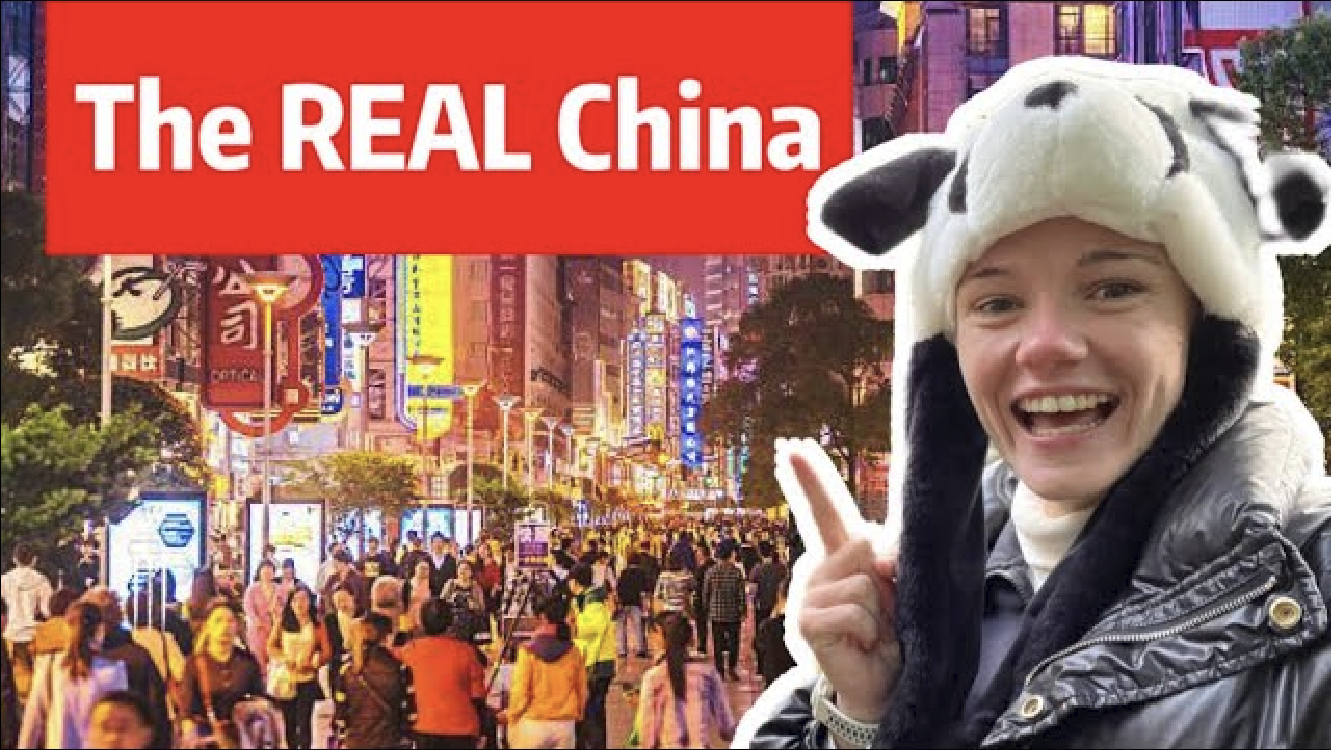
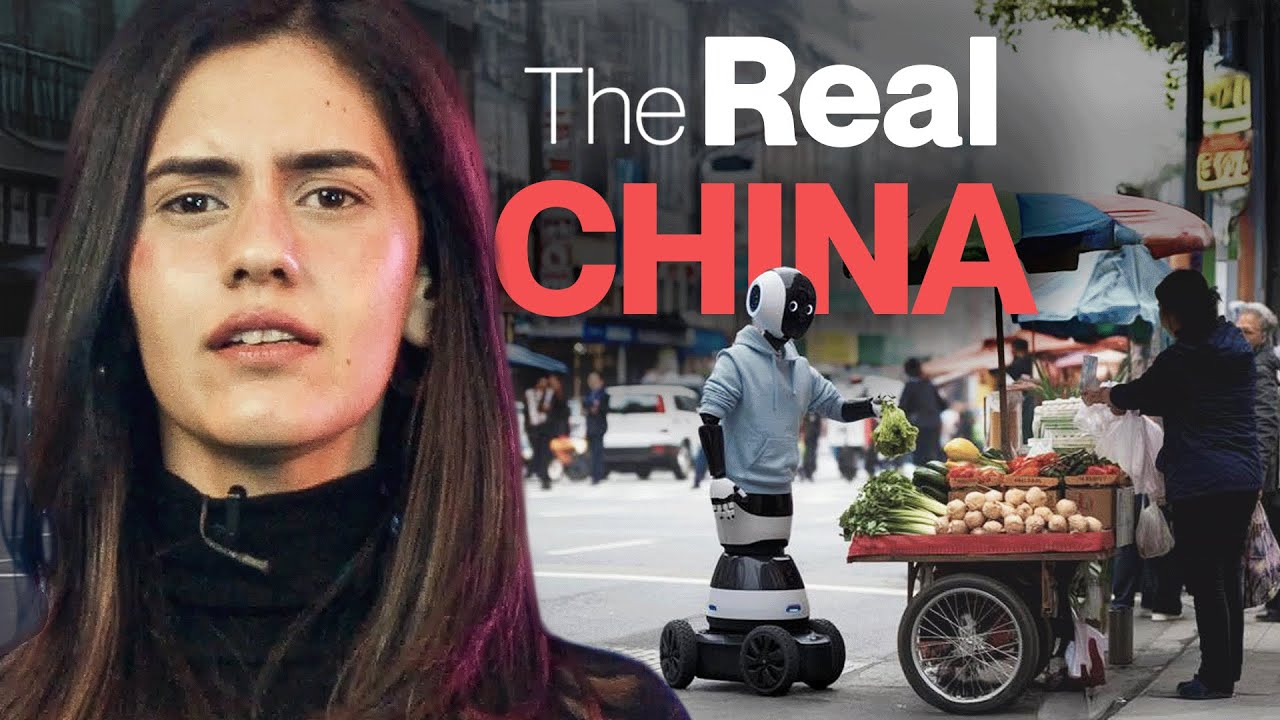
<p>And the prerequisite for all this is fundamental institutional change—the fall of the CCP is not only a victory for political justice but also the best economic stimulus.</p>]]></content><author><name>去共化</name></author><category term="Politics" /><category term="Economy" /><category term="CCP" /><category term="Totalitarianism" /><summary type="html"><![CDATA[Since the reform and opening up, China has gradually shed the overt totalitarianism of the Mao era and instead established a market economy framework. However, this transformation did not lead to a genuine democratic system. The CCP has never fully abandoned the possibility of returning to totalitarian rule. What it undertook was merely a “strategic retreat”—a reduction of authoritarian control on certain superficial fronts while simultaneously strengthening autocratic measures and restructuring its power architecture.]]></summary><media:thumbnail xmlns:media="http://search.yahoo.com/mrss/" url="https://de-ccp.org/en/assets/images/39.jpg" /><media:content medium="image" url="https://de-ccp.org/en/assets/images/39.jpg" xmlns:media="http://search.yahoo.com/mrss/" /></entry><entry><title type="html">From the Nazis to the CCP: The Bloody Reality Hidden Beneath Ordinary Scenes</title><link href="https://de-ccp.org/en/2025/02/20/From-the-Nazis-to-the-CCP-The-Bloody-Reality-Hidden-Beneath-Ordinary-Scenes" rel="alternate" type="text/html" title="From the Nazis to the CCP: The Bloody Reality Hidden Beneath Ordinary Scenes" /><published>2025-02-20T00:00:00+00:00</published><updated>2025-02-20T00:00:00+00:00</updated><id>https://de-ccp.org/en/2025/02/20/From%20the%20Nazis%20to%20the%20CCP-The%20Bloody%20Reality%20Hidden%20Beneath%20Ordinary%20Scenes</id><content type="html" xml:base="https://de-ccp.org/en/2025/02/20/From-the-Nazis-to-the-CCP-The-Bloody-Reality-Hidden-Beneath-Ordinary-Scenes"><![CDATA[<p>Recently, a foreign travel influencer posted a video on a video-sharing platform. In the footage, she stands on a bustling street in a major Chinese city, with lively restaurants, bustling crowds, and a wide array of dazzling goods in the background.</p>

<p>In the video, she marvels:</p>

<blockquote>
  <p>The people look happy, right? The Western media says the people are not free in this country; they are forced to work all the time. So can someone explain to me why these people are smiling? Why they’re happy? Why they are enjoying their lives? Maybe the Western media is lying.</p>
</blockquote>

<div style="text-align: center;">
  <img src="/assets/images/34.png" alt="XXX" style="width: 75%; height: auto;" />
</div>

<p>The logic behind this statement is: if the people in a country are smiling, life is bustling, and the cities are prosperous, then this must mean the country is free, happy, and without problems.
This viewpoint seems intuitive but is extremely superficial. History tells us that a nation’s apparent prosperity and the everyday lives of its citizens do not necessarily prove that they have true freedom.</p>

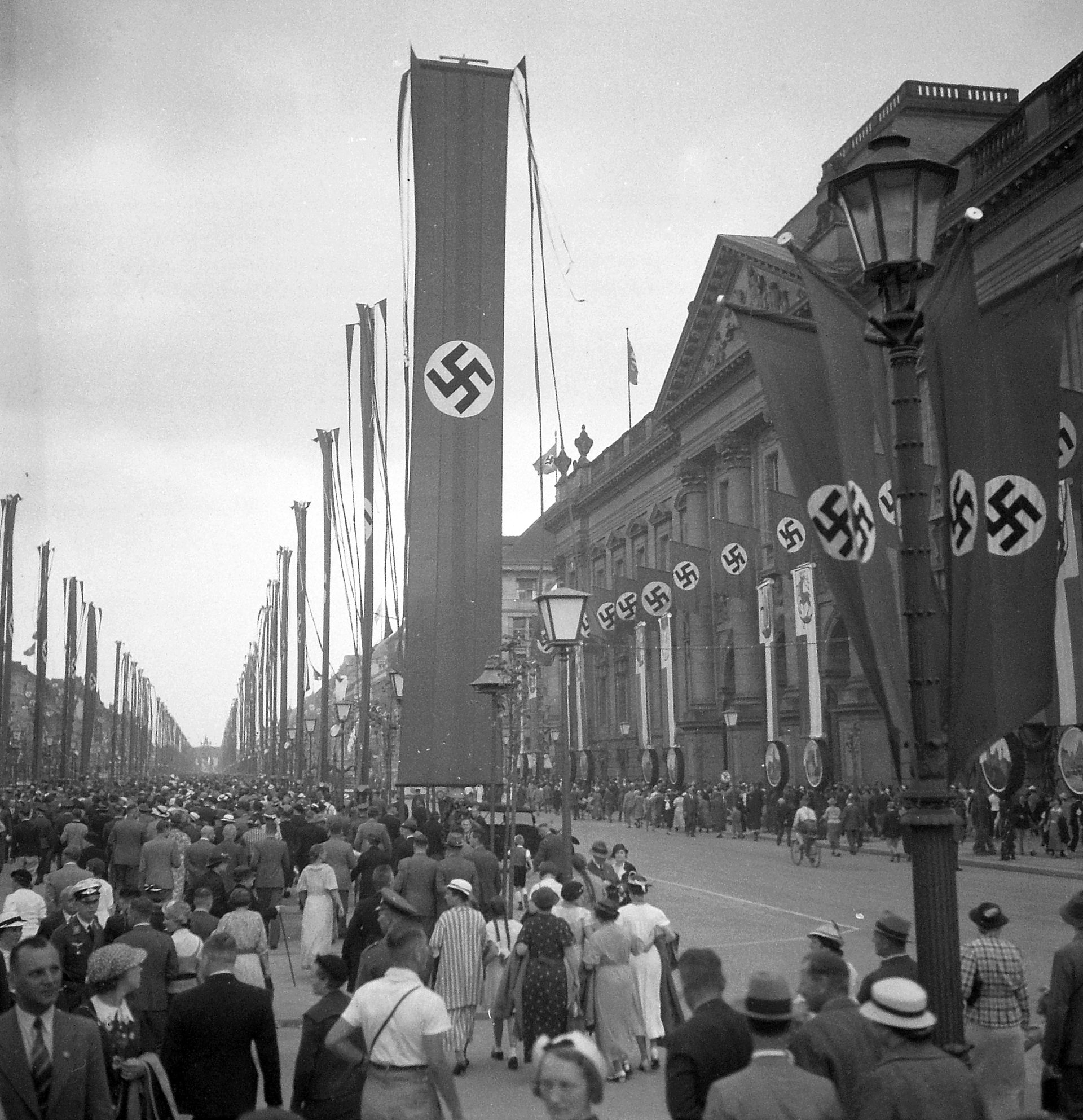
<p>In 1936, when Nazi Germany hosted the Berlin Olympics, foreign tourists and journalists saw a clean, orderly, and thriving country. They did not see that Jews had been stripped of their citizenship, political dissidents were imprisoned in concentration camps, and the Gestapo was monitoring speech nationwide.</p>

<p>The same is true for China under the CCP today.</p>

<h2 id="if-you-walked-into-nazi-germany">If You Walked into Nazi Germany</h2>

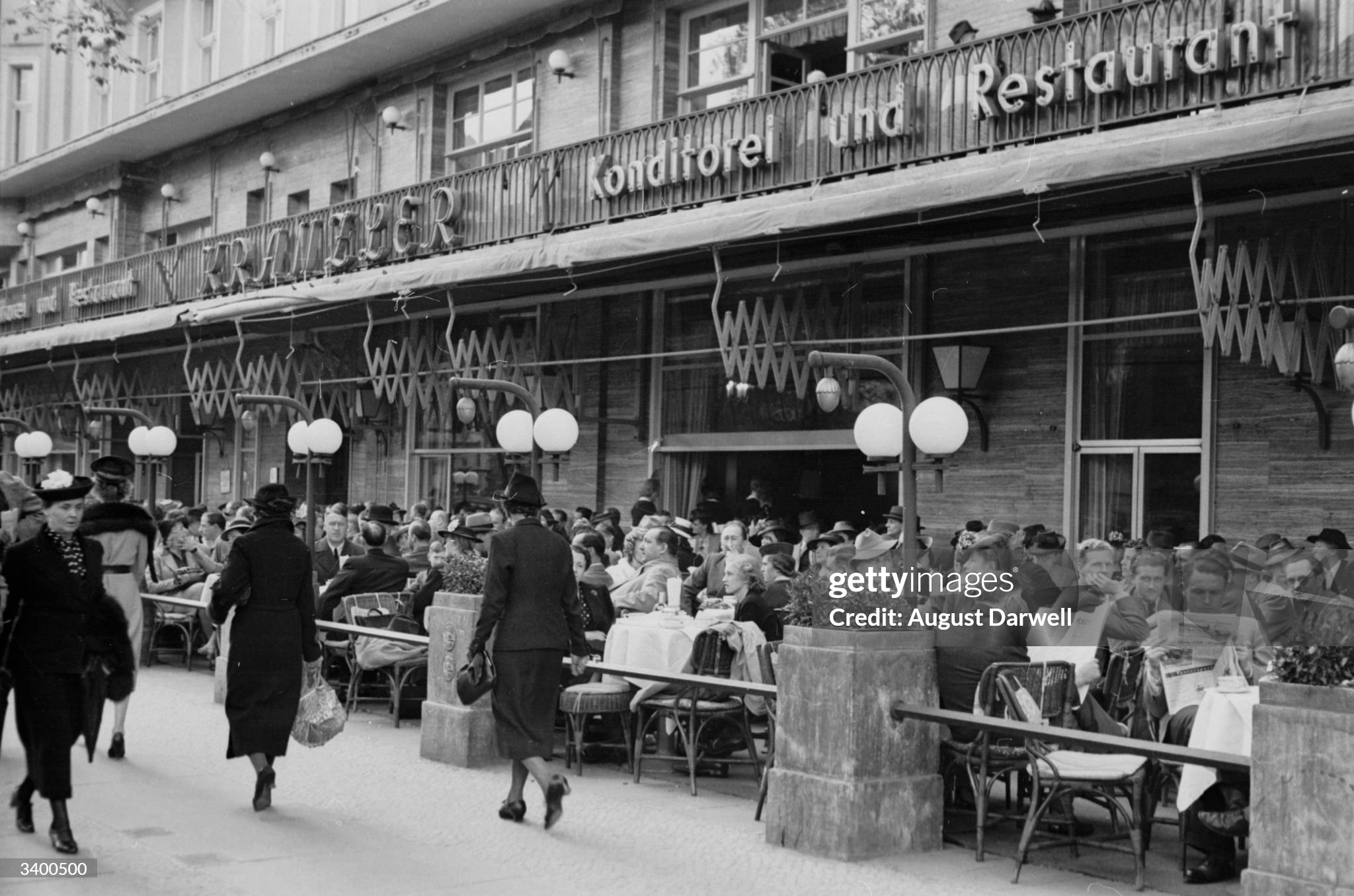
<p>If you walked into Nazi Germany, you would find a seemingly prosperous and orderly society. The streets were clean, people were well-dressed, factories were humming with activity, and shop windows were filled with goods. People wore smiles, and their lives seemed far better than during the economic depression a decade earlier.</p>

<p>On the streets of Berlin, you would see children playing in newly built parks, men in uniforms listening to Hitler’s speeches in public squares, women pushing baby strollers while discussing the latest national policies. You would hear the radio broadcasting Nazi propaganda, praising Germany’s revival, and glorifying the Führer for saving the nation and restoring people’s pride.</p>

<p>If you asked an ordinary German, “Is your life good?” they would likely answer, “Yes, much better than before!”</p>

<p>But if you asked, “Do you know what happens to Jews, communists, and dissidents?” their expressions might turn grim, they might quickly change the subject, or even become wary—as if you had said something you shouldn’t have.</p>

<div style="text-align: center;">
  <img src="/assets/images/37.jpg" alt="XXX" style="width: 90%; height: auto;" />
  <p style="font-size: 15px; font-style: italic;">The reality of Nazi Germany: June 3, 1939, Berlin, people enjoying mild weather at an outdoor café, a moment of calm before World War II. Originally published in "Picture Post" Issue 152—"Berlin in the Sun," 1939. (Photograph by August Darwell)</p>
</div>

<p>If you were an ordinary German worker, you would find it easier to get a job than your counterparts in Britain or France.</p>

<p>The government invested heavily in infrastructure projects, such as the construction of the <strong>Autobahn (German highway system)</strong>, providing jobs for thousands of workers.
The military industry boomed, and the expansion of the army gave many young people employment and social status.
Wages increased, prices remained stable, and social welfare expanded. You could afford a Volkswagen, and perhaps even plan a vacation.
Crime rates fell, streets were orderly, and there were no homeless people or beggars—they had all been sent to labor camps or “relocated.”</p>

<p>If you were a German student, your textbooks would be filled with nationalist ideology. Teachers would tell you that Germany had been <strong>oppressed by the “unfair Treaty of Versailles” and that the Führer was leading Germany to revival. You would be required to salute Hitler daily, join the Hitler Youth (Hitlerjugend), undergo military training, and learn how to become a future Aryan warrior.</strong></p>

<div style="text-align: center;">
  <img src="/assets/images/36.jpg" alt="XXX" style="width: 90%; height: auto;" />
  <p style="font-size: 15px; font-style: italic;">Nazi Germany, 1936, with the National Library on the right and the Brandenburg Gate in the background.</p>
</div>

<p>If you were a housewife, you would be encouraged to have more children because Germany needed more “pure Aryans.” The government even rewarded families with multiple children. Your neighbors and friends would talk about how <strong>“the Führer has brought us new hope,”</strong> and you would feel no different.</p>

<p>To many ordinary Germans, life in Nazi Germany was indeed better than before, seemingly richer and more orderly than in many European countries.
But behind it all was a reality they either couldn’t see or refused to acknowledge.</p>

<p>The government claimed that Jews were the enemy of the state, conspiring and manipulating the economy, leading to Germany’s poverty. During the <strong>“Kristallnacht” (Night of Broken Glass) in 1938</strong>, Jewish shops and synagogues were smashed, and Jews were taken away.</p>

<p>On the streets, you had not seen Jews in a long time. You remembered that, as a child, you had Jewish neighbors who ran shops, clinics, and cafés. But now they were all gone. You heard they had been “sent away,” but you didn’t know where, and you dared not ask.
Eventually, you chose to forget, because no one dared to talk about it.</p>

<p>If you were a German factory owner, you might have employed some “prisoners of war” or “laborers” from Eastern Europe. They looked numb, wore ragged clothes, were emaciated, and did the hardest, dirtiest work. You knew they had been forcibly brought in, but you didn’t ask questions—because questioning could bring trouble for yourself.</p>

<p>At the train station, you occasionally saw trains full of Jews, political prisoners, and Roma people slowly heading eastward. You heard they were being “resettled” or sent to “labor camps.” People whispered about their fate, but most remained silent.</p>

<p>You had heard rumors about concentration camps, but official propaganda claimed they were just “re-education facilities” designed to “reintegrate hostile elements into society.” Perhaps you had seen people sent to <strong>Dachau or Auschwitz</strong>, but you never saw them return.
Even if you sometimes felt something was wrong, you chose to immerse yourself in your daily life and quickly pushed those doubts away.</p>

<p>It wasn’t until 1945, when Allied forces entered Germany, occupied Berlin, and liberated Auschwitz and Buchenwald, that tens of thousands of Germans were forced to witness the piles of corpses in the concentration camps. They were shocked, enraged, in denial, and in tears.</p>

<h2 id="the-same-thing-is-happening-in-china-today">The Same Thing Is Happening in China Today</h2>

<p>If you walk into China under the CCP today, you will see a country that appears prosperous, peaceful, and orderly.</p>

<p>In major cities like Beijing, Shanghai, and Shenzhen, skyscrapers rise high, subways run smoothly, and shopping malls are packed with people. Young people wear stylish clothes, sip Starbucks coffee, and discuss the latest trends, technology, and movies. The streets are clean, the public security seems excellent—everything appears safer and more stable than in many countries.</p>

<p>When you open your phone and browse Douyin, Xiaohongshu, or Weibo, you find young people discussing the best restaurants, skincare products, and adorable pets. Your WeChat Moments are filled with friends posting vacation photos, children’s report cards, newly bought houses, and cars.
You don’t see criticism of the government, discussions about the Tiananmen Square Massacre, the truth about Xinjiang’s concentration camps, the struggles of petitioners, the torture in black jails, or the industry of live organ harvesting—because all of this has been completely erased by information censorship.</p>

<p>If you ask an ordinary Chinese person, “Is your life good?” they will likely answer, “Of course, it’s better than in most countries!”</p>

<p>But if you then ask, “Do you know about the Xinjiang concentration camps?” “Do you know about the Tiananmen Square Massacre?” “Do you know what happens to dissidents and human rights lawyers?” they might frown, glance at you cautiously, and whisper, “We shouldn’t talk about these things.”</p>

<p>If you continue to ask, “Do you know about the struggles of petitioners and wrongful convictions?” they might look confused, unsure of how to respond—because they have never seen any news about these people.
Those who are oppressed by abuses of power, intercepted while petitioning, or falsely convicted never appear on TV. Those who fight for their rights are either in prison, under “stability control,” or have “committed suicide.”</p>

<p>They cannot talk about Tiananmen, Falun Gong, or the Xinjiang camps.
They might know that human rights lawyers are arrested or that some people disappear for criticizing the government, but they won’t ask further questions.
They might have heard of “re-education camps” in Xinjiang, but they choose to believe the government’s explanation: “It’s for national security.”</p>

<p>Ordinary Chinese people, like ordinary Germans under the Nazis, live in a system of information control and social fear, disguised by a seemingly normal daily life.</p>

<div style="text-align: center;">
  <img src="/assets/images/38.jpg" alt="XXX" style="width: 90%; height: auto;" />
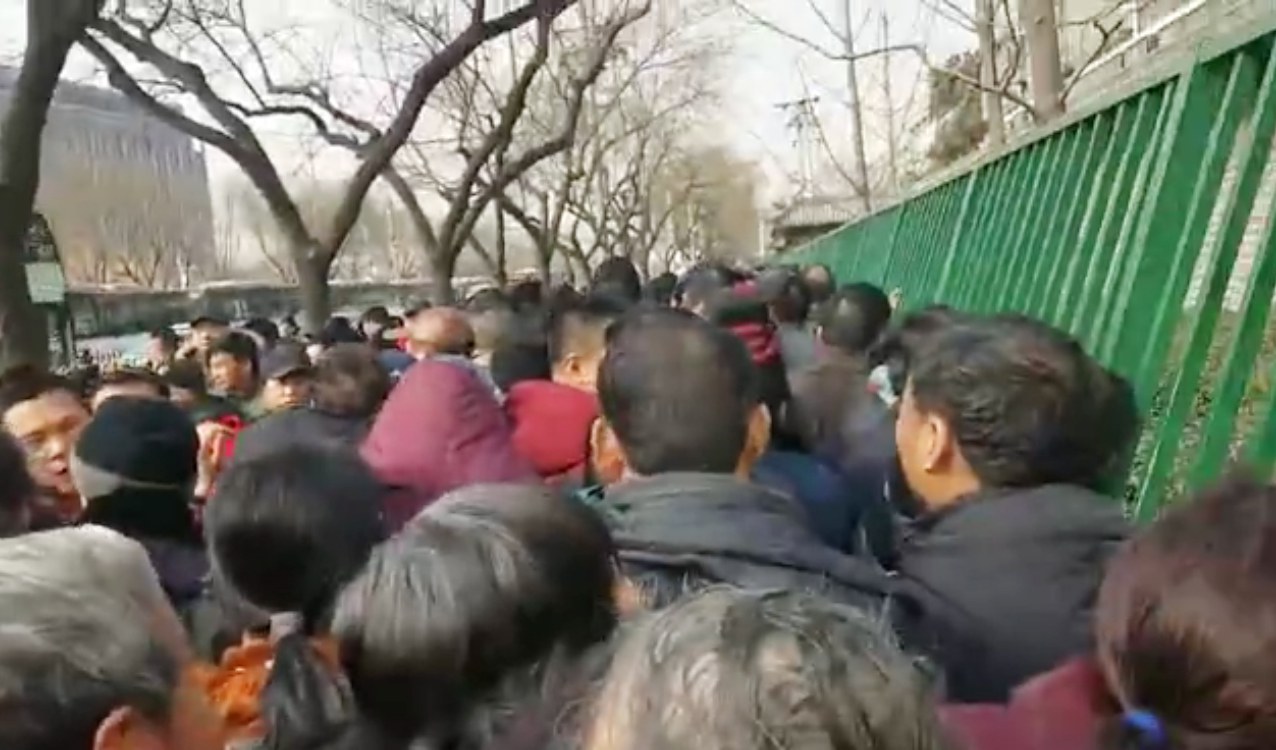
  <p style="font-size: 15px; font-style: italic;">Outside the National Public Complaints and Proposals Administration in Beijing, petitioners gather in crowds.</p>
</div>

<p>If you are a Chinese student, your textbooks contain no mention of Tiananmen, the Cultural Revolution, or the Great Famine. There are no deep discussions on democracy, human rights, or freedom.
Your teachers tell you that China is rising and the U.S. is declining. From a young age, you are taught to <strong>“love the Party and love the country.”</strong> If someone criticizes the government, they must be “influenced by foreign forces.”</p>

<p>On social media platforms like Douyin, Weibo, and Xiaohongshu, all you see are stories of national revival, patriotic slogans, and short videos mocking the chaos of the West. Your feed is flooded with trending topics like <strong>“America is collapsing,” “China’s technology leads the world,” “The West envies China’s high-speed rail,”</strong> and the algorithm constantly pushes content reinforcing the belief that <strong>China’s system is the best in the world.</strong></p>

<p>Every piece of information you receive tells you: “China is soaring, the West is declining, and patriotism is the only correct value.” But have you ever wondered if what you know is truly the whole picture?
When you try to look for alternative perspectives, you find that all dissenting voices have been censored. The world you see is the version carefully curated and shaped by the CCP, and you cannot even imagine that other narratives exist.</p>

<p>If you are a Chinese white-collar worker, your living standard may be higher than in many countries. You live in a modern city, commute via high-speed rail and subways, enjoy cashless payments, and have easy access to shopping malls, food delivery, and entertainment. Your job, mortgage, and social circle make life seem peaceful and fulfilling.</p>

<p>On the surface, the internet is full of information, but deep down, you know that many “sensitive words” will prevent your comments from being posted. You know which topics should not be discussed, which words should not be said, or your account might be banned, and you might even get a visit from the authorities.
You have already become accustomed to <strong>“not discussing politics”</strong> and avoiding sensitive topics.
Occasionally, you might see someone posting about their grievances—telling stories of forced demolitions, coerced confessions, or missing loved ones. You feel anger and discomfort, but before long, those posts are deleted, the topics vanish, and it’s as if nothing ever happened.</p>

<p>At first, you might discuss these issues in whispers with friends. But over time, as the news cycle moves on, life continues, and you gradually stop thinking about it—until the next similar event occurs, repeating the cycle.
You know something is wrong, but you also know that as long as you stay silent, your life can continue. So you choose to forget, adapt, and comply—just like everyone else around you.</p>

<p>If you are a Chinese doctor, your life appears respectable, but you know that the healthcare system is not purely about saving lives.</p>

<p>You are aware that Chinese hospitals have a secret organ transplant industry. Normally, a patient might wait years for a suitable donor, but in China, the wait can be as short as a few days. You have heard about certain surgeries where the donors were not voluntary but came from “special channels.” Sometimes, you wonder: Who are these organ “donors”? Where did they come from? Were they once alive? But you never ask—because the more you ask, the more dangerous it becomes.</p>

<p>You know that organ harvesting from Falun Gong practitioners, Uyghurs, and other groups is no longer a secret, but no one dares to discuss it openly. You have heard of doctors who tried to expose the truth and suddenly “disappeared” or were “suicided.” You tell yourself that your duty is simply to treat patients, and the source of the organs is beyond your control.</p>

<h2 id="can-a-peaceful-daily-life-prove-freedom">Can a Peaceful Daily Life Prove Freedom?</h2>

<div style="text-align: center;">
  <img src="/assets/images/35.jpg" alt="XXX" style="width: 75%; height: auto;" />
</div>

<p>Smiling faces on the streets, bustling restaurants, and a variety of consumer goods—do these prove that a country is free from oppression? If we judge history and reality by such logic, we make a grave mistake in understanding the truth.</p>

<p>Nazi Germany had thriving commercial districts where people drank beer and enjoyed government-provided social welfare.
Yet, at the same time, Jews, communists, journalists, and disabled individuals were being systematically persecuted, sent to concentration camps, and ultimately perished in gas chambers.
The happiness of ordinary Germans did not change the crimes of the Nazis—it only concealed the ongoing genocide.</p>

<p>In the 1950s, Moscow’s Red Square was full of people strolling, and Soviet economic reports boasted of “full employment and abundant resources.”
Meanwhile, millions of Gulag prisoners were forced into labor in the freezing wastelands of Siberia, and thousands of political dissidents were sent to labor camps for simply writing a letter or saying the wrong thing.
The laughter in the streets did not mean Soviet citizens were free.</p>

<p>Today, Shanghai, Shenzhen, and Beijing have towering skyscrapers, crowded shopping centers, and social media platforms full of young people sharing their consumer experiences.
Yet, on the other side of this prosperity:</p>
<ul>
  <li>Uyghurs are being brainwashed and forced into labor in Xinjiang’s concentration camps.</li>
  <li>Petitioners, dissidents, journalists, and human rights lawyers are under house arrest, tortured, or “suicided.”</li>
</ul>

<p>Most Chinese people are unaware of the reality of the Xinjiang camps because the government has completely blocked access to information.
Young people don’t know about the Tiananmen Square Massacre because every textbook and social media platform prohibits mentioning it.
When you don’t know the truth, you don’t feel anger, and you have no motivation to resist.
Ignorance is not freedom—it is an illusion deliberately created.</p>

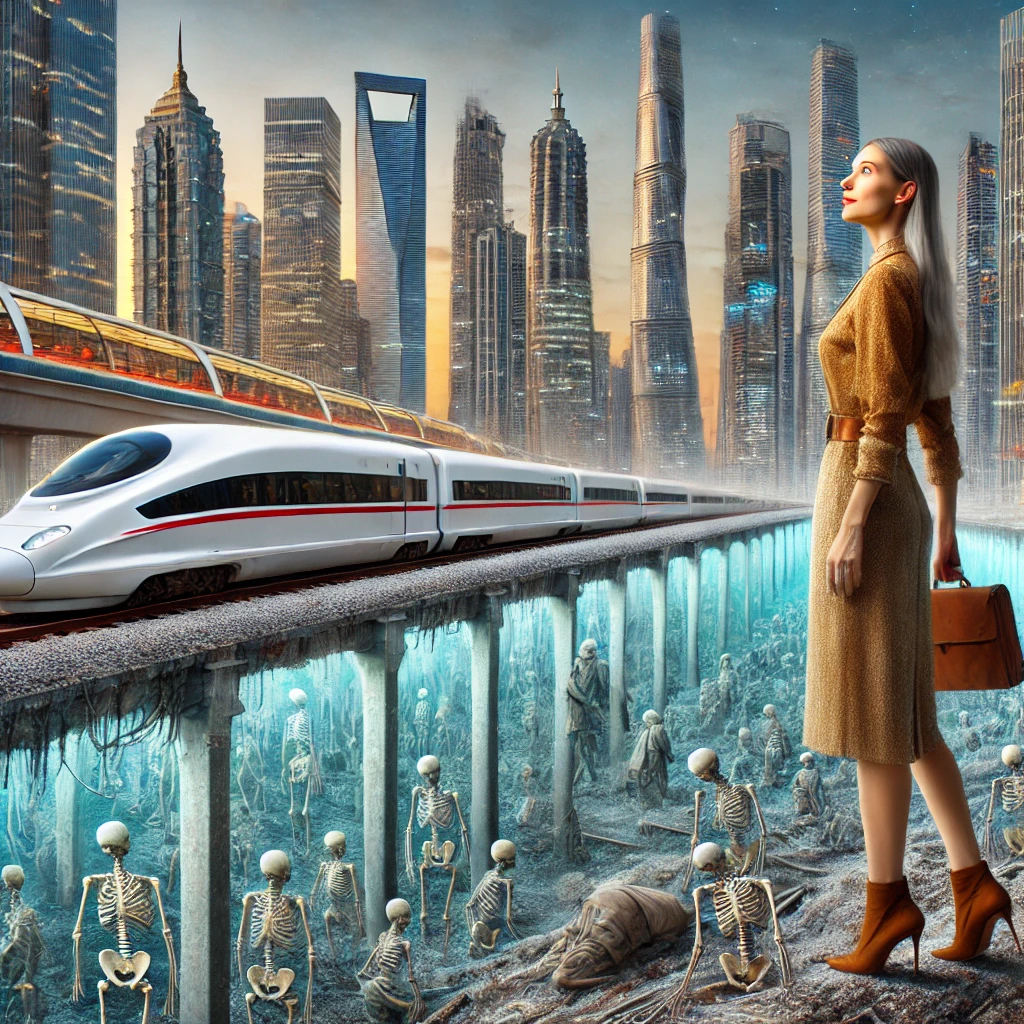
<p>The illusion of happiness does not prove freedom. Instead, it is the most effective disguise of a totalitarian regime.
The world must open its eyes and not be deceived by the illusion of prosperity.</p>

<div style="text-align: center;">
  <img src="/assets/images/33.webp" alt="XXX" style="width: 85%; height: auto;" />
</div>]]></content><author><name>去共化</name></author><category term="Politics" /><category term="History" /><category term="China" /><category term="Totalitarianism" /><category term="Truth" /><summary type="html"><![CDATA[Recently, a foreign travel influencer posted a video on a video-sharing platform. In the footage, she stands on a bustling street in a major Chinese city, with lively restaurants, bustling crowds, and a wide array of dazzling goods in the background.]]></summary><media:thumbnail xmlns:media="http://search.yahoo.com/mrss/" url="https://de-ccp.org/en/assets/images/33.jpg" /><media:content medium="image" url="https://de-ccp.org/en/assets/images/33.jpg" xmlns:media="http://search.yahoo.com/mrss/" /></entry><entry><title type="html">‘China’ Is Not Just a Country: The Multidimensional Connotations of a Modern Nation’s Origin and Cultural Geography</title><link href="https://de-ccp.org/en/2025/01/01/'China'-Is-Not-Just-a-Country-The-Multidimensional-Connotations-of-a-Modern-Nation's-Origin-and-Cultural-Geography" rel="alternate" type="text/html" title="‘China’ Is Not Just a Country: The Multidimensional Connotations of a Modern Nation’s Origin and Cultural Geography" /><published>2025-01-01T00:00:00+00:00</published><updated>2025-01-01T00:00:00+00:00</updated><id>https://de-ccp.org/en/2025/01/01/&apos;China&apos;%20Is%20Not%20Just%20a%20Country-The%20Multidimensional%20Connotations%20of%20a%20Modern%20Nation&apos;s%20Origin%20and%20Cultural%20Geography</id><content type="html" xml:base="https://de-ccp.org/en/2025/01/01/&apos;China&apos;-Is-Not-Just-a-Country-The-Multidimensional-Connotations-of-a-Modern-Nation&apos;s-Origin-and-Cultural-Geography"><![CDATA[<p>The concept of “China” (中国 or ZhongGuo) has always been dynamic throughout history: it expanded from the cultural center of the Central Plains to a regional cultural-geographical concept and later to a multi-ethnic political state entity.</p>

<h2 id="concept-of-cultural-geography-and-political-state-entity">Concept of cultural geography and political state entity</h2>

<p>In ancient ‘China,’ the name of the state changed continuously with shifts in rulers. For example, during the Mongol Yuan dynasty, the state’s official name was ‘Great Yuan,’ while during the Ming dynasty, it was ‘Great Ming.’ For a long time, ‘China’ primarily functioned as a cultural-geographical concept rather than an official state name.</p>

<p>However, as the Qing Empire interacted with Western powers, the term “ZhongGuo” (China) began to be used politically. For example, during treaties with Russia, such as the 1689 Treaty of Nerchinsk, the Qing used “ZhongGuo” (China) to refer to its multi-ethnic empire. Through this designation, the Qing rulers attempted to unify the empire’s diverse peoples within a single political framework.</p>

<p>Despite this, for ordinary Han Chinese, “ZhongGuo” (China) remained closely associated with the Han cultural heartland. For ethnic groups in border regions, “China” did not always serve as a universally accepted symbol.</p>

<p>Following the Qing Empire’s defeat in the Opium War (1840), the traditional worldview of “China” as the “center of the world” was replaced by Western concepts of nation-states and treaty systems. In the 1842 Treaty of Nanking, “China” was translated into Chinese as “ZhongGuo” (中国 or The Middle Kingdom), formalizing its usage in official documents. This translation was widely accepted by Western diplomats and sinologists, further establishing the association between “China” and “ZhongGuo” (中国 or The Middle Kingdom).</p>

<p><strong>The Qing Empire’s adoption of “ZhongGuo” (China or 中国) as a self-designation marked the transition of “ZhongGuo” (China or 中国) from a cultural-geographical concept to a political nation-state.</strong> 
From this, it can be seen that ‘China’ in the sense of cultural geography and ‘China’ as a political entity are two concepts with different connotations. The first political state entity to officially use ‘China’ as its formal name was actually the Qing Empire.</p>

<h2 id="historical-changes-in-imperial-territories">Historical Changes in Imperial Territories</h2>

<p>Anyone familiar with the history of “China” knows that ancient Chinese empires were never static territorial entities but dynamic ones that evolved over time. Even within the same dynasty, territorial boundaries shifted, reflecting the expansion and contraction of imperial authority.</p>

<p>To focus only on specific historical moments without considering the broader historical context leads to a skewed perspective. For instance, highlighting the turbulence following the An Lushan Rebellion during the Tang Dynasty neglects its preceding prosperity; similarly, viewing “China” solely through the lens of the Republic of China in 1932 ignores the vast territories of the Qing Empire or modern China’s reformation process.</p>

<blockquote>
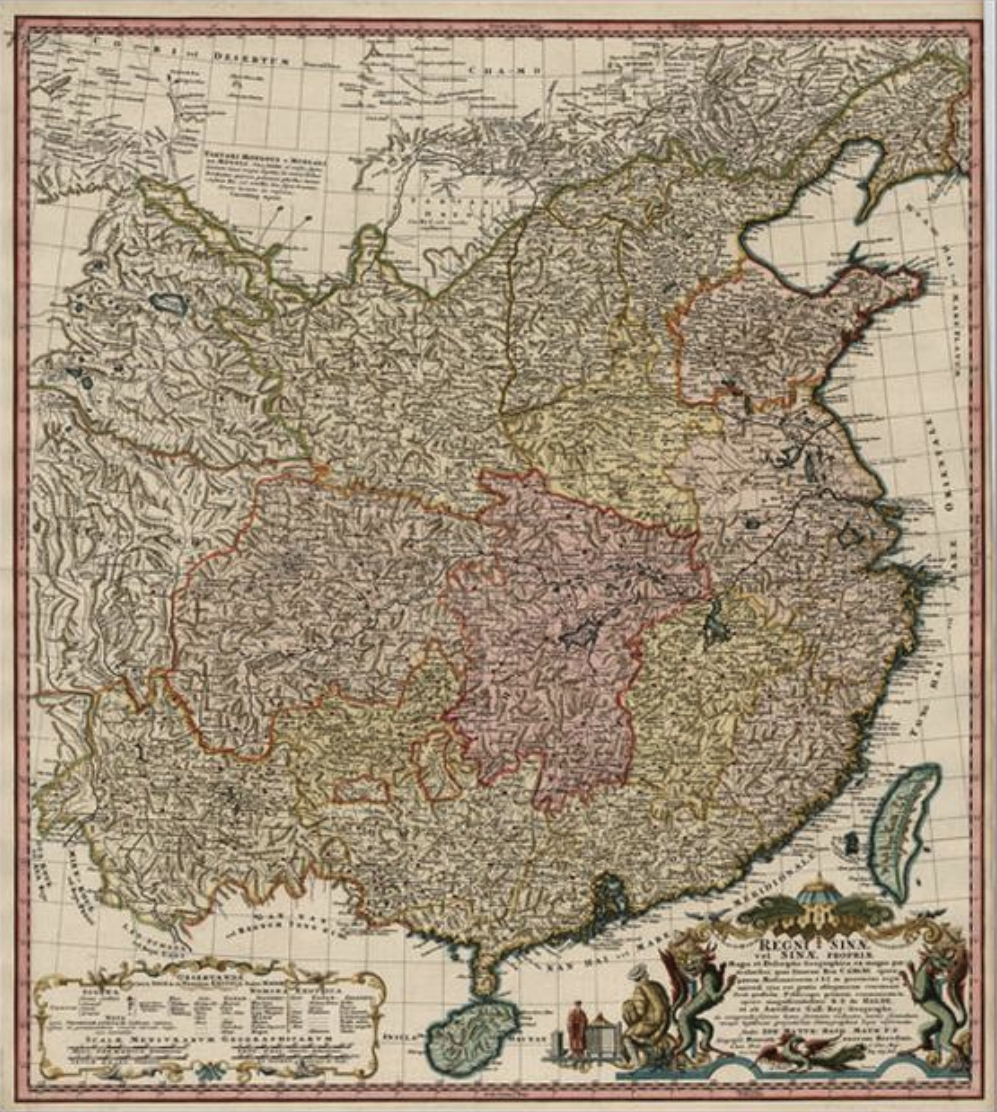
  <p>The following map, created in 1740 by German cartographer Johann Matthäus Haas based on French cartographer D’Anville’s work, depicts the territory under Qing control during the Kangxi reign. The shaded areas represent lands firmly controlled by the Qing, while the unshaded areas mark regions the empire sought to expand into. Compared to modern maps of China, this map excludes large areas like Yunnan, Sichuan, Gansu, Qinghai, Inner Mongolia, and Manchuria, with Tibet and Xinjiang barely featured.</p>
</blockquote>

<div style="text-align: center;">
  <img src="/assets/images/04.png" alt="1740 German Map of Qing China" style="width: 75%; height: auto;" />
  <p>1740 German Map of Qing China</p>
</div>

<blockquote>
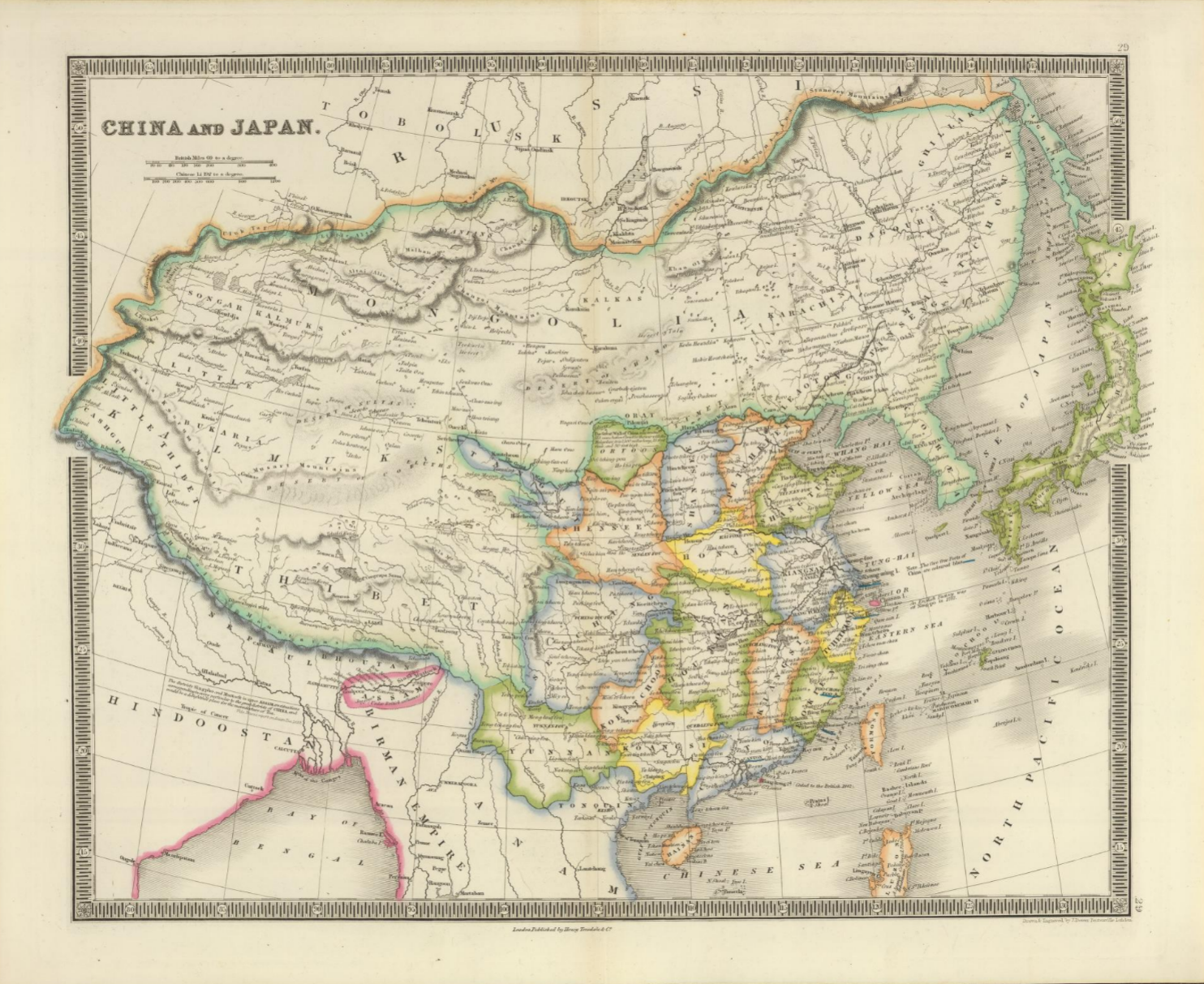
  <p>The map below was published in London, England, in 1844, depicting China and Japan. In the maps of Qing China created by Europeans, the interior and the peripheral regions are often marked in different colors.</p>
</blockquote>

<p>We can see that the ‘interior’ roughly corresponds to the ‘China’ in terms of cultural geography, while the entire territory of the Qing Empire represents the political entity of ‘China’.</p>

<div style="text-align: center;">
  <img src="/assets/images/05.png" alt="1844 Map of China and Japan" style="width: 100%; height: auto;" />
  <p>1844 Map of China and Japan</p>
</div>

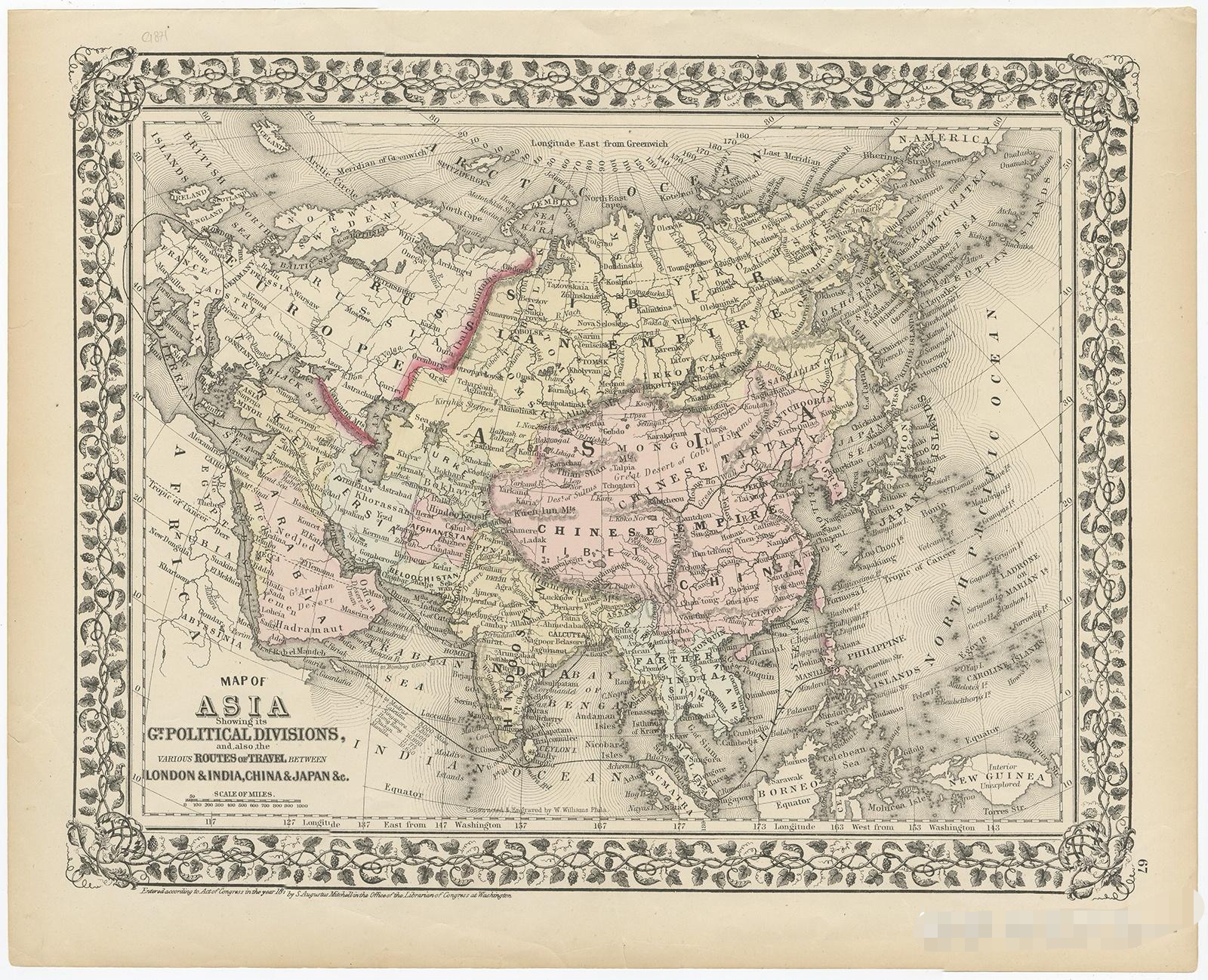
<p>A further map clearly labels “China,” the “Chinese Empire,” and “Chinese Tartary,” corresponding to the cultural-geographical “China,” the political state “Chinese Empire,” and the imperial dependencies.</p>

<div style="text-align: center;">
  <img src="/assets/images/03.jpeg" alt="Asia Map Including the Qing Empire" style="width: 100%; height: auto;" />
  <p>Unattributed Asia Map Including the Qing Empire</p>
</div>

<p>The Qing Empire’s territorial boundaries evolved significantly, reflecting the expansion and contraction of imperial power. However, one point is clear: <strong>territorial borders are dynamic and subject to change, not immutable or fixed throughout history.</strong></p>

<h2 id="multiple-political-entities-within-one-cultural-geography">Multiple Political Entities Within One Cultural Geography</h2>

<p>Political fragmentation does not necessarily imply cultural disunity. Multiple political entities can coexist within the same cultural-geographical framework, sharing a unified cultural identity.</p>

<p>For example:</p>
<ul>
  <li>During the <strong>Spring and Autumn Period</strong>, competing states maintained cultural unity through Confucian norms.</li>
  <li>The <strong>Three Kingdoms Period</strong> featured political division but cultural continuity based on Han traditions.</li>
  <li>During the <strong>Southern and Northern Dynasties</strong>, northern nomadic and southern Han-led regimes upheld a shared cultural foundation.</li>
  <li>The <strong>Five Dynasties and Ten Kingdoms</strong> saw severe political fragmentation, yet all regimes were rooted in Tang Dynasty cultural norms.</li>
</ul>

<p>In modern times, “China” as a cultural concept extends beyond a single political entity. <strong>Overseas Chinese communities</strong>, for instance, identify with Chinese culture without necessarily aligning politically with the People’s Republic of China. Regions like Hong Kong, Taiwan, and Southeast Asia maintain cultural ties to “China” while being politically distinct.</p>

<p>Strictly equating “One China” with a single political entity overlooks the diversity and richness of Chinese culture. Viewed through a cultural-geographical lens, “One China” can accommodate multiple political entities while preserving cultural unity.</p>

<h2 id="conclusion">Conclusion</h2>

<p>“China” serves as both a cultural-geographical identity and a political nation-state. Recognizing “One China” as a cultural framework enriches discussions about diversity and unity. Understanding “China” as a broader cultural-geographical concept deepens our appreciation of its complexity, offering new perspectives on nationhood, culture, and history.</p>]]></content><author><name>去共化</name></author><category term="Culture" /><category term="Politics" /><category term="China" /><summary type="html"><![CDATA[The concept of “China” (中国 or ZhongGuo) has always been dynamic throughout history: it expanded from the cultural center of the Central Plains to a regional cultural-geographical concept and later to a multi-ethnic political state entity.]]></summary><media:thumbnail xmlns:media="http://search.yahoo.com/mrss/" url="https://de-ccp.org/en/assets/images/05.jpg" /><media:content medium="image" url="https://de-ccp.org/en/assets/images/05.jpg" xmlns:media="http://search.yahoo.com/mrss/" /></entry><entry><title type="html">#CanWeAvoidChineseExclusion? CCP United Front Infiltration May Spark a New Wave of Chinese Exclusion Backlash</title><link href="https://de-ccp.org/en/2024/11/11/CCP-United-Front-Infiltration-May-Spark-a-New-Wave-of-Anti-Chinese-Backlash" rel="alternate" type="text/html" title="#CanWeAvoidChineseExclusion? CCP United Front Infiltration May Spark a New Wave of Chinese Exclusion Backlash" /><published>2024-11-11T00:00:00+00:00</published><updated>2024-11-11T00:00:00+00:00</updated><id>https://de-ccp.org/en/2024/11/11/CCP%20United%20Front%20Infiltration%20May%20Spark%20a%20New%20Wave%20of%20Anti-Chinese%20Backlash</id><content type="html" xml:base="https://de-ccp.org/en/2024/11/11/CCP-United-Front-Infiltration-May-Spark-a-New-Wave-of-Anti-Chinese-Backlash"><![CDATA[<p>The Chinese Communist Party (CCP) government has woven an extensive network of connections within Chinese American communities in the U.S. through its United Front tactics. This influence strategy not only threatens the political independence of the United States but may also place Chinese communities in jeopardy. If U.S.-China relations deteriorate or break down, this covert network could become a trigger for widespread anti-Chinese sentiment.</p>

<h3 id="the-ccps-covert-infiltration-through-relationship-networks">The CCP’s covert infiltration through “relationship networks”</h3>

<p>The CCP uses interpersonal networks to ‘build connections’ for infiltration, establishing power and influence abroad. In the U.S., the CCP has quietly built an influence network through various regional associations, student unions, business chambers, cultural societies, and thematic events and groups. Although these organizations ostensibly promote cultural activities or help Chinese immigrants integrate into local communities, in reality, they assist the CCP in advancing its political agenda.</p>

<p>For example, the connections between the Henan Association of America and Chinese American Congresswoman Grace Meng have come under scrutiny. Reports suggest that this organization not only participates in cultural affairs within the Chinese community but also maintains backdoor connections with the CCP, aligning its members with the objectives of the CCP’s United Front Work Department. This form of “silent infiltration” allows the CCP’s influence to expand gradually overseas, creating a covert network that is difficult to dismantle once it has taken shape.</p>

<h3 id="the-ccps-united-front-infiltration-raises-the-risk-of-a-wave-of-chinese-exclusion">The CCP’s united front infiltration raises the risk of a “Wave of Chinese Exclusion”</h3>

<p>The CCP’s network of United Front influence poses a threat to U.S. national security and could also spark new racial tensions in American society. <strong>Due to the CCP’s control and infiltration of Chinese community organizations, ordinary citizens may find it difficult to distinguish which groups act as CCP proxies and which genuinely serve their communities. This confusion could lead to a perception that all Chinese Americans are potential “enemies.”</strong></p>

<p>Historically, the U.S. has witnessed waves of anti-Chinese sentiment during periods of economic and political tension, such as the Chinese Exclusion Act of the late 19th century. Now, similar xenophobic sentiments could resurface. Should U.S.-China relations devolve into hostility, the Chinese American community may become the innocent target of collective suspicion and discrimination, bearing enormous economic and social pressures and even facing outright exclusion.</p>

<h3 id="preventing-a-resurgence-of-chinese-exclusion-sentiment">Preventing a Resurgence of Chinese Exclusion Sentiment</h3>

<p>The re-emergence of large-scale Chinese Exclusion sentiment may not be impossible.</p>

<p>To prevent a repetition of this tragic history, Chinese community organizations need to remain vigilant, transparently distinguishing themselves from the CCP to avoid being drawn into its influence network. Group leaders should publicly disclose funding sources and partners, avoiding opacity that could lead to misunderstandings and hostility toward the broader Chinese community.</p>

<p>Meanwhile, American society must recognize the true intentions behind the CCP’s United Front efforts and take effective measures to monitor these covert networks. Strict enforcement of laws like the Foreign Agents Registration Act (FARA) can ensure that organizations representing foreign government interests disclose their funding sources and real intentions, thereby reducing foreign influence.</p>

<p>In summary, only through a collective societal effort can we ensure that the Chinese American community remains unscathed by the CCP’s United Front tactics, thereby preventing the spread of xenophobic sentiments and the resurgence of large-scale Chinese Exclusion backlash.</p>

<p><img src="/assets/images/08.webp" alt="CCP United Front Infiltration and Potential Anti-Chinese Backlash" /></p>]]></content><author><name>去共化</name></author><category term="Politics" /><category term="United-Front" /><summary type="html"><![CDATA[The Chinese Communist Party (CCP) government has woven an extensive network of connections within Chinese American communities in the U.S. through its United Front tactics. This influence strategy not only threatens the political independence of the United States but may also place Chinese communities in jeopardy. If U.S.-China relations deteriorate or break down, this covert network could become a trigger for widespread anti-Chinese sentiment.]]></summary><media:thumbnail xmlns:media="http://search.yahoo.com/mrss/" url="https://de-ccp.org/en/assets/images/08.jpg" /><media:content medium="image" url="https://de-ccp.org/en/assets/images/08.jpg" xmlns:media="http://search.yahoo.com/mrss/" /></entry><entry><title type="html">Power Comes from the Barrel of a Gun Versus Power Comes from the Ballot: A Comparison and Reflection on Two Paths to Regime Change</title><link href="https://de-ccp.org/en/2024/11/10/Power-Comes-from-the-Barrel-of-a-Gun-Versus-Power-Comes-from-the-Ballot-A-Comparison-and-Reflection-on-Two-Paths-to-Regime-Change" rel="alternate" type="text/html" title="Power Comes from the Barrel of a Gun Versus Power Comes from the Ballot: A Comparison and Reflection on Two Paths to Regime Change" /><published>2024-11-10T00:00:00+00:00</published><updated>2024-11-10T00:00:00+00:00</updated><id>https://de-ccp.org/en/2024/11/10/Power%20Comes%20from%20the%20Barrel%20of%20a%20Gun%20Versus%20Power%20Comes%20from%20the%20Ballot-A%20Comparison%20and%20Reflection%20on%20Two%20Paths%20to%20Regime%20Change</id><content type="html" xml:base="https://de-ccp.org/en/2024/11/10/Power-Comes-from-the-Barrel-of-a-Gun-Versus-Power-Comes-from-the-Ballot-A-Comparison-and-Reflection-on-Two-Paths-to-Regime-Change"><![CDATA[<p>In the evolution of modern political thought, “power comes from the barrel of a gun” and “power comes from the ballot” represent two fundamentally different methods of regime change. These two approaches are not only distinct means of acquiring power but also reflect contrasting underlying values and social foundations. The former achieves power through force or military means, often associated with dictatorial and authoritarian rule; the latter achieves power transfer through peaceful elections, embodying the core spirit of democratic systems. These two approaches bring about widespread discussions and deep reflections on legitimacy, sustainability, societal impact, and political ethics.</p>

<h2 id="i-legitimacy-and-justification-of-regime-change">I. Legitimacy and Justification of Regime Change</h2>

<p>The concept of <strong>power comes from the barrel of a gun</strong> emphasizes that the origin of power is force, with this logic relying primarily on violence as the basis for regime legitimacy. Many dictators who rise to power through armed struggle or military might claim the legitimacy of their rule, viewing force as the sole effective path to power. While violence can quickly establish the foundation of a regime, it often lacks broad popular support, leading to a legitimacy confined only to the ruling elite, without deep social recognition. Furthermore, when a dictator views “power from the barrel of a gun” as the source of his regime’s legitimacy, he indirectly acknowledges that others might use the same means to overthrow him. Violence-based regime change, though sometimes seen as a necessary measure under certain conditions, is widely regarded as lacking enduring legitimacy and risks falling into a cycle of violence, turning regime change into a vicious struggle.</p>

<p>In contrast, <strong>power comes from the ballot</strong> achieves regime change through democratic elections and has a much stronger legitimacy base. Ballots represent public opinion, and power transfer through peaceful, open, and fair elections ensures that the source of authority aligns with the will of the people. This approach not only endows the government with greater legitimacy but also reflects the core principles of social contract, where the legitimacy of power stems from the citizens’ free choice. Thus, in democratic countries, regime change through elections provides lasting legitimacy, establishing a stable foundation for social order and public trust.</p>

<h2 id="ii-stability-and-sustainability">II. Stability and Sustainability</h2>

<p>In terms of sustainability, <strong>power comes from the ballot</strong> is clearly superior to <strong>power comes from the barrel of a gun</strong>. The peaceful transfer mechanism of electoral power reduces social conflict and maintains national stability. This system allows for regime change within a legal framework, avoiding violence and turmoil, and ensuring a smooth power transition. Therefore, regime change within democratic systems is more sustainable because it reduces the risk of violence, relies on institutionalized rule of law, and builds lasting social trust.</p>

<p><strong>Power comes from the barrel of a gun</strong>, however, faces significant sustainability issues. History shows that regimes acquired through violent means are often fragile, as their legitimacy depends solely on the presence of military power. Once military dominance weakens or control is lost, such regimes face the threat of being overthrown. More importantly, violent regimes are prone to a “cycle of violence”—where a new regime is just as vulnerable to violent overthrow, resulting in an unstable social environment. Additionally, the single-source legitimacy of force-based regimes makes it challenging to garner widespread social recognition and support, making it difficult to sustain over the long term.</p>

<h2 id="iii-impact-on-social-development">III. Impact on Social Development</h2>

<p>The impacts of <strong>power comes from the barrel of a gun</strong> and <strong>power comes from the ballot</strong> on social development are also markedly different. <strong>Power comes from the ballot</strong> depends on pluralistic political participation and public opinion, which helps promote social progress and economic development. Electoral mechanisms allow citizens to supervise policies and provide feedback on government decisions through democratic processes. This approach to regime change encourages inclusivity and openness, leading to a fairer allocation of public resources, reducing corruption and resource waste, and providing a sound foundation for social development.</p>

<p>Conversely, <strong>power comes from the barrel of a gun</strong> often has a negative impact on social development. The power base of violent regimes lacks popular support, making resource distribution and policy decisions more prone to monopolization by a few, leading to the concentration of social resources, abuse of power, and widespread corruption. Additionally, violent regime changes lack transparency and accountability mechanisms, making governance failure more likely in social development. Scholars generally believe that violent regimes not only hinder long-term development but also lead to social stratification, suppress innovation and diversity, and ultimately impede national progress.</p>

<h2 id="iv-political-ethics-and-moral-considerations">IV. Political Ethics and Moral Considerations</h2>

<p><strong>Power comes from the barrel of a gun</strong> is ethically controversial. It relies on violence and repression to achieve regime change, often negatively affecting individual rights and social justice. In violent regimes, political opponents are frequently oppressed, and citizens’ freedoms are restricted, leading to frequent human rights violations. This method of controlling the populace through force goes against modern political ethics and lacks lasting moral legitimacy.</p>

<p>In contrast, <strong>power comes from the ballot</strong> aligns more closely with modern political ethics because it respects individuals’ choice rights and basic civil liberties. Democratic electoral regime change is based on citizens’ free will, giving the source of power legitimacy and reducing the likelihood of abuse and corruption. Power through the ballot aligns with humanitarian principles and helps establish a fair and peaceful society. Thus, from a moral and ethical standpoint, power through the ballot is more appealing to the public and is therefore widely supported as a model consistent with the advancement of human civilization.</p>

<h2 id="v-transition-from-power-from-the-barrel-of-a-gun-to-power-from-the-ballot">V. Transition from “Power from the Barrel of a Gun” to “Power from the Ballot”</h2>

<p>Historically, armed struggle has occasionally served as a pathway to democracy under extreme conditions. In cases of severe autocratic oppression, where peaceful measures are ineffective, violent regime change may be seen as a necessary, or even the only, option. However, the fundamental purpose of violent overthrow is to create an environment for peaceful transition, ultimately realizing <strong>power through the ballot</strong>—establishing a system where regime change occurs through elections rather than force. Thus, armed struggle should not be the ultimate source of power but should lay the groundwork for democratic participation and the right to peaceful elections. Using ballots presupposes a democratic system and using force undermines that very system.</p>

<p>When a dictator considers “power from the barrel of a gun” as the legitimate source of his regime, he implicitly validates the idea that others might use similar methods to seize power. This logic not only underscores the fragility of authoritarian regimes but also reveals the inherent instability of violence-based legitimacy, as any power obtained through violence is susceptible to further violent regime change. Therefore, the transition from “the gun” to “the ballot” is not merely a change in methods of regime change but a shift in political legitimacy and institutional stability.</p>

<h2 id="conclusion">Conclusion</h2>

<p>Overall, <strong>power comes from the barrel of a gun</strong> and <strong>power comes from the ballot</strong> represent two contrasting methods of power transfer. The violent nature of <strong>power from the barrel of a gun</strong> leads to limited legitimacy and sustainability, risks a cycle of violence, and has long-term negative impacts on social development. In contrast, <strong>power from the ballot</strong> achieves power transfer through peaceful elections that reflect public opinion, has higher legitimacy and stability, and is more conducive to social progress and individual rights protection. From a modern political science perspective, achieving power transfer through ballots is a hallmark of political civilization.</p>

<p>While violence may be considered a necessary means of regime change under extreme conditions, in the long run, a truly enduring regime must rely on public support, fairness in governance, and legal protection. Whether respecting individual rights or fostering long-term social development, <strong>power from the ballot</strong> is undoubtedly more aligned with the standards of political civilization. Ensuring fair elections and achieving peaceful transition will be key issues for ongoing exploration and deepening within modern political processes.</p>

<p><img src="/assets/images/07.png" alt="Power Comes from the Barrel of a Gun Versus Power Comes from the Ballot: A Comparison and Reflection on Two Paths to Regime Change" /></p>]]></content><author><name>去共化</name></author><category term="Politics" /><category term="Ideology" /><summary type="html"><![CDATA[In the evolution of modern political thought, “power comes from the barrel of a gun” and “power comes from the ballot” represent two fundamentally different methods of regime change. These two approaches are not only distinct means of acquiring power but also reflect contrasting underlying values and social foundations. The former achieves power through force or military means, often associated with dictatorial and authoritarian rule; the latter achieves power transfer through peaceful elections, embodying the core spirit of democratic systems. These two approaches bring about widespread discussions and deep reflections on legitimacy, sustainability, societal impact, and political ethics.]]></summary><media:thumbnail xmlns:media="http://search.yahoo.com/mrss/" url="https://de-ccp.org/en/assets/images/07.jpg" /><media:content medium="image" url="https://de-ccp.org/en/assets/images/07.jpg" xmlns:media="http://search.yahoo.com/mrss/" /></entry><entry><title type="html">From Ideological Confrontation to National Interests: Historical Evolution and Current Analysis of International Relations</title><link href="https://de-ccp.org/en/2024/10/20/From-Ideological-Confrontation-to-National-Interests-Historical-Evolution-and-Current-Analysis-of-International-Relations" rel="alternate" type="text/html" title="From Ideological Confrontation to National Interests: Historical Evolution and Current Analysis of International Relations" /><published>2024-10-20T00:00:00+00:00</published><updated>2024-10-20T00:00:00+00:00</updated><id>https://de-ccp.org/en/2024/10/20/From%20Ideological%20Confrontation%20to%20National%20Interests:%20Historical%20Evolution%20and%20Current%20Analysis%20of%20International%20Relations</id><content type="html" xml:base="https://de-ccp.org/en/2024/10/20/From-Ideological-Confrontation-to-National-Interests-Historical-Evolution-and-Current-Analysis-of-International-Relations"><![CDATA[<p>Throughout history, the interplay between ideological confrontation and national interests has shaped the framework of international relations. From the two World Wars to the end of the Cold War, conflicts between different ideologies frequently altered the world map and the balance of power. However, with the collapse of the Soviet Union and China’s economic reforms, the world returned to an era where national interests took precedence. In this era, <strong>national interests and pragmatism</strong> replaced ideological confrontation as the core driving forces of the international order. This article explores the background and logic behind this evolution, illustrating why, in contemporary international relations, <strong>pragmatism</strong> and <strong>national interests</strong> increasingly take precedence over <strong>ideology</strong>, through a series of historical examples.</p>

<h2 id="i-from-the-napoleonic-wars-to-german-support-for-lenin-historical-examples-of-national-interests-overriding-ideology">I. From the Napoleonic Wars to German Support for Lenin: Historical Examples of National Interests Overriding Ideology</h2>

<p>Although ideology has been a primary driver of national conflicts at certain points in history, many examples demonstrate that, when pursuing core strategic goals, <strong>pragmatic national interests</strong> often take precedence over ideological differences.</p>

<h3 id="1-the-napoleonic-wars-britains-alliance-with-feudal-states">1. The Napoleonic Wars: Britain’s Alliance with Feudal States</h3>

<p>During the Napoleonic Wars, post-revolutionary France quickly transitioned to capitalism, abolishing feudal privileges through a series of revolutionary reforms and establishing a system dominated by the bourgeoisie. However, <strong>Britain, as a mature capitalist state, chose to ally with European feudal monarchies (like Austria, Prussia, and Russia) to collectively oppose Napoleonic France</strong>. On the surface, this seemed contrary to ideological alignment since Britain was economically closer to France, but this strategic choice was purely based on national interests and realism.</p>

<ul>
  <li><strong>Britain’s Motivation</strong>: Despite France’s political and economic structures being more akin to capitalism, Napoleon’s imperial expansion threatened Britain’s global dominance. To curb French military expansion on the European continent, Britain was willing to set aside ideological differences and cooperate with feudal states to maintain the balance of power in Europe. This strategy exemplified how national interests can outweigh ideological affiliations.</li>
</ul>

<h3 id="2-germanys-support-for-lenins-return-to-russia-1917">2. Germany’s Support for Lenin’s Return to Russia (1917)</h3>

<p>In 1917, to weaken its eastern front enemy, Russia, Germany adopted a bold strategy: <strong>it facilitated Lenin’s return from exile in Switzerland to Russia to incite revolution, overthrow the Provisional Government, and establish a Soviet regime</strong>. Lenin swiftly negotiated with Germany and, in March 1918, signed the Treaty of Brest-Litovsk. Under this treaty, Russia exited World War I, surrendering vast western territories, including Poland, Ukraine, and the Baltic states, in exchange for peace.</p>

<ul>
  <li><strong>Germany’s Pragmatic Strategy</strong>: Germany was fully aware that Lenin’s ideology was fundamentally different, even opposing their own. However, for pragmatic strategic reasons, Germany temporarily set aside ideological differences, supporting Lenin’s revolution to weaken Russia and force its exit from World War I. This illustrates how, when opposing ideologies do not pose an expansionist threat, national interests often trump ideological divides.</li>
</ul>

<h2 id="ii-the-three-dominant-ideologies-during-world-war-ii">II. The Three Dominant Ideologies During World War II</h2>

<p>During World War II, the world was dominated by three major ideologies: <strong>Liberal Democracy, Fascism, and Communism</strong>.</p>

<ol>
  <li>
    <p><strong>Liberal Democracy</strong> was represented by the United States, Britain, France, and other Western democracies, emphasizing individual freedom, democratic elections, the rule of law, and market economies. This ideology aimed to ensure individual rights and economic freedom, promoting global prosperity through free markets and international cooperation.</p>
  </li>
  <li>
    <p><strong>Fascism</strong>, promoted by Nazi Germany, Fascist Italy, and Imperial Japan, emphasized state supremacy, extreme nationalism, racial superiority, and totalitarian control. Fascist states pursued military expansion and dictatorship, attempting to establish a new world order led by authoritarian regimes.</p>
  </li>
  <li>
    <p><strong>Communism</strong> was represented by the Soviet Union, advocating for the abolition of private property through proletarian revolution, public ownership of the means of production, and the establishment of a classless society. Rooted in Marxist theory, Communism opposed capitalist systems, emphasizing comprehensive state control over the economy.</p>
  </li>
</ol>

<p>During World War II, the conflict between Liberal Democracy and Fascism became the main form of global conflict. Although Communism and Liberal Democracy were ideologically opposed, they temporarily allied against a common enemy (the Fascist states), which eventually led to the Axis powers’ defeat.</p>

<h2 id="iii-the-cold-war-the-peak-of-ideological-confrontation">III. The Cold War: The Peak of Ideological Confrontation</h2>

<p>After World War II, the world entered the <strong>Cold War</strong>, marking the peak of ideological confrontation. The Cold War divided the world into two major blocs: the <strong>liberal democratic and capitalist camp led by the United States</strong> and the <strong>Communist camp led by the Soviet Union</strong>. Competition between these two blocs manifested not only in military and economic spheres but also as a global ideological struggle.</p>

<ol>
  <li>
    <p><strong>The Expansion of Liberal Democracy by the U.S.</strong>: The United States and its allies promoted liberal democracy and market capitalism globally, using initiatives like the “Marshall Plan” to rebuild post-war Europe and contain the spread of Communism. The core values of Liberal Democracy include individual freedom, political participation, and economic freedom, fostering national development through capitalist market mechanisms.</p>
  </li>
  <li>
    <p><strong>The Spread of Communism by the Soviet Union</strong>: The Soviet Union aimed to establish a socialist world order based on proletarian dictatorship by supporting Communist revolutions worldwide. Many proxy wars during the Cold War (e.g., the Korean War, the Vietnam War) were direct manifestations of this ideological struggle.</p>
  </li>
</ol>

<h2 id="iv-the-post-cold-war-shift-from-ideological-confrontation-to-the-primacy-of-national-interests">IV. The Post-Cold War Shift: From Ideological Confrontation to the Primacy of National Interests</h2>

<p>The <strong>collapse of the Soviet Union in 1991</strong> and <strong>China’s economic reforms</strong> marked a profound change in the global political landscape, signaling the relative retreat of ideological confrontation and the rise of <strong>pragmatic diplomacy</strong>. After the Cold War, the combination of liberal democracy and market capitalism became the dominant global ideology, but ideological confrontations no longer defined international relations. Instead, <strong>national interests and pragmatism</strong> emerged as the primary drivers of cooperation and conflict between nations.</p>

<h3 id="1-the-victory-of-liberal-democracy-and-the-dominance-of-market-capitalism">1. The Victory of Liberal Democracy and the Dominance of Market Capitalism</h3>

<p>With the end of the Cold War, <strong>liberal democracy</strong> combined with <strong>market capitalism</strong> became the mainstream ideology worldwide. Many countries transitioned to liberal democracies and market economies, integrating into the globalized system through political reforms and economic liberalization. However, this did not mean that all nations abandoned authoritarian or autocratic systems.</p>

<h3 id="2-the-continuation-of-authoritarianism-authoritarianism-residual-fascism-and-communism">2. The Continuation of Authoritarianism: Authoritarianism, Residual Fascism, and Communism</h3>

<p>Despite the victory of liberal democracy, <strong>authoritarianism</strong> (including remnants of Fascism and Communism) persisted. Authoritarian states maintained centralized control politically but engaged with the global economy through market reforms. For example, after its economic reforms, China retained a one-party system but embraced market mechanisms to drive rapid economic growth.</p>

<h2 id="v-conclusion-from-ideological-confrontation-to-the-return-of-realism">V. Conclusion: From Ideological Confrontation to the Return of Realism</h2>

<p>Reflecting on history, from the Napoleonic Wars and Germany’s support for Lenin, where national interests prevailed over ideology, to the three major ideologies of Liberal Democracy, Fascism, and Communism during World War II that divided the world into opposing camps, and then to the global confrontation between Liberal Democracy and Communism during the Cold War. However, with the end of the Cold War and China’s economic reforms, ideological confrontation no longer held center stage, and the world re-entered an era dominated by <strong>national interests and pragmatic diplomacy</strong>. Although authoritarianism still exists, it does not form global confrontations like during the Cold War era. Criticism of autocracy by democratic countries is more about maintaining their internal values, expressing their stance through diplomatic pressure and sanctions, but it rarely leads to actual international confrontation. National interests and realism have returned to the forefront of international politics, shaping the current global order.</p>

<p><img src="/assets/images/09.webp" alt="From Ideological Confrontation to National Interests: Historical Evolution and Current Analysis of International Relations" /></p>]]></content><author><name>去共化</name></author><category term="Politics" /><category term="Ideology" /><summary type="html"><![CDATA[Throughout history, the interplay between ideological confrontation and national interests has shaped the framework of international relations. From the two World Wars to the end of the Cold War, conflicts between different ideologies frequently altered the world map and the balance of power. However, with the collapse of the Soviet Union and China’s economic reforms, the world returned to an era where national interests took precedence. In this era, national interests and pragmatism replaced ideological confrontation as the core driving forces of the international order. This article explores the background and logic behind this evolution, illustrating why, in contemporary international relations, pragmatism and national interests increasingly take precedence over ideology, through a series of historical examples.]]></summary><media:thumbnail xmlns:media="http://search.yahoo.com/mrss/" url="https://de-ccp.org/en/assets/images/09.jpg" /><media:content medium="image" url="https://de-ccp.org/en/assets/images/09.jpg" xmlns:media="http://search.yahoo.com/mrss/" /></entry><entry><title type="html">Aid or Support for Authoritarianism? How Japan’s Assistance to the CCP State was Used as a Tool by the CCP to Consolidate Its Power</title><link href="https://de-ccp.org/en/2024/09/22/Aid-or-Support-for-Authoritarianism-How-Japan's-Assistance-to-CCP-State-was-Used-as-a-Tool-by-the-CCP-to-Consolidate-Its-Power" rel="alternate" type="text/html" title="Aid or Support for Authoritarianism? How Japan’s Assistance to the CCP State was Used as a Tool by the CCP to Consolidate Its Power" /><published>2024-09-22T00:00:00+00:00</published><updated>2024-09-22T00:00:00+00:00</updated><id>https://de-ccp.org/en/2024/09/22/Aid%20or%20Support%20for%20Authoritarianism?%20How%20Japan&apos;s%20Assistance%20to%20CCP%20State%20was%20Used%20as%20a%20Tool%20by%20the%20CCP%20to%20Consolidate%20Its%20Power</id><content type="html" xml:base="https://de-ccp.org/en/2024/09/22/Aid-or-Support-for-Authoritarianism-How-Japan&apos;s-Assistance-to-CCP-State-was-Used-as-a-Tool-by-the-CCP-to-Consolidate-Its-Power"><![CDATA[<p><a href="https://zh.wikipedia.org/zh-hans/%E6%97%A5%E6%9C%AC%E5%AF%B9%E5%8D%8E%E6%94%BF%E5%BA%9C%E5%BC%80%E5%8F%91%E6%8F%B4%E5%8A%A9">Japan’s Official Development Assistance (ODA) to the CCP State</a> began in 1979 and lasted until 2018, becoming an important link in Sino-Japanese relations. Japan’s aid to the CCP State not only promoted infrastructure construction and economic development in the CCP State but also laid the foundation for economic and technological cooperation between the two countries. However, despite the positive effects this aid had on the CCP State’s economic construction, it also brought about significant negative impacts.</p>

<h3 id="the-positive-role-of-japans-aid">The Positive Role of Japan’s Aid</h3>

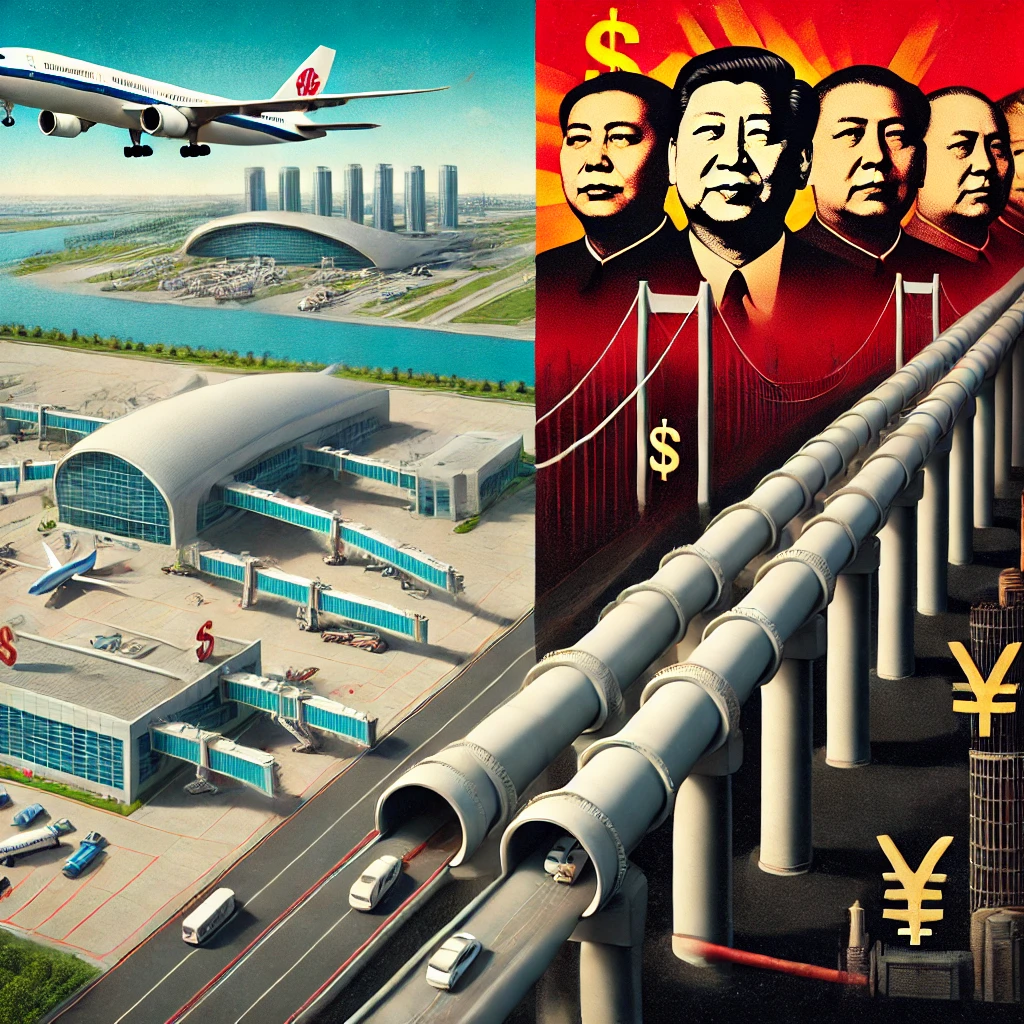
<p>First, Japan’s aid played a huge role in the CCP State’s economic development, especially in areas like infrastructure, environmental protection, and technology transfer. For example, Japan’s ODA funded the expansion of Beijing Capital International Airport and Shanghai Pudong International Airport, which became major international aviation hubs and supported the CCP State’s globalization process. Additionally, transportation projects such as the Wuhan Yangtze River Bridge greatly improved the CCP State’s infrastructure, making intercity transport more convenient and promoting regional economic balance.</p>

<p>Japan’s environmental aid should not be overlooked either. Cooperation between the CCP State and Japan in building air pollution monitoring systems has helped the CCP State make significant progress in environmental protection. The aid brought not only funds and equipment but also promoted technology transfer and talent development, all contributing to the CCP State’s sustainable development.</p>

<p>Moreover, Japan’s ODA also helped improve the CCP State’s healthcare services, such as through the construction of the Sino-Japanese Friendship Hospital, which played an important role in enhancing Beijing’s medical conditions. Japan’s technical cooperation projects also trained a large number of professionals in the CCP State, boosting the CCP State’s technical capacity and management skills.</p>

<h3 id="negative-impact-aid-framed-as-a-ccp-success-story">Negative Impact: Aid Framed as a CCP Success Story</h3>

<p>Japan’s aid has often been used by the CCP regime for propaganda, becoming a tool to help the regime legitimize its rule.</p>

<h4 id="1-downplaying-external-aid-enhancing-the-legitimacy-of-the-ccp">1. Downplaying External Aid, Enhancing the Legitimacy of the CCP</h4>

<p>After receiving Japanese aid, the CCP government typically uses its propaganda machine to portray these achievements as a result of the CCP’s leadership in economic development while downplaying Japan’s contribution. For example, after the completion of projects like Beijing Capital International Airport and Shanghai Pudong International Airport, the government’s propaganda mainly emphasized the success of the CCP State’s reform and opening-up policies, without widely acknowledging Japan’s aid. As a result, the public often assumes that these achievements are solely due to the CCP’s policies, which not only raises the government’s prestige among the people but also allows the CCP to claim the benefits of foreign aid as its own political achievements.</p>

<p>By leveraging the results of external aid, the CCP strengthens the legitimacy of its rule. In the CCP State’s political system, the legitimacy of the regime is often tied to economic development and national achievements. Japanese aid has significantly accelerated the CCP State’s economic development, but these achievements have been used by the CCP as proof of the correctness of its policies. Infrastructure projects, environmental improvements, and poverty alleviation efforts have all been framed as CCP successes rather than outcomes of external assistance. This propaganda strengthens public recognition of the CCP’s governing capacity, thereby prolonging the legitimacy of its authoritarian regime.</p>

<h4 id="2-aid-used-as-a-symbol-of-the-ccp-states-strength-in-propaganda">2. Aid Used as a Symbol of the CCP State’s Strength in Propaganda</h4>

<p>In external propaganda, the CCP often presents major infrastructure projects and economic successes as symbols of national strength, while Japan’s aid is downplayed in this narrative. For example, projects like the Wuhan Yangtze River Bridge and the Beijing-Qinhuangdao Railway are touted as evidence of the CCP State’s industrial capabilities, with the public rarely realizing that these achievements were made possible by Japanese aid. Instead, these projects are used to showcase the CCP State’s “self-reliance” under the leadership of the CCP.</p>

<h3 id="negative-effects-on-donor-countries">Negative Effects on Donor Countries</h3>

<p>These propaganda effects not only solidify the legitimacy of the CCP’s regime domestically but also bolster the CCP State’s image of strength on the international stage. For countries like Japan, this may have led to unintended negative consequences.</p>

<p>Firstly, Japan’s aid was intended to foster friendly relations and help the CCP State improve its economic and social conditions. However, when the CCP claims these achievements as its own successes rather than cooperative results, and when it projects a strong national image internationally, the donor country may feel that the aid’s ultimate outcome has deviated from its original purpose.</p>

<p>Secondly, this propaganda strategy may negatively affect public opinion within the donor country. As the CCP uses foreign aid to reinforce its authoritarian rule and project a powerful stance on the global stage, the public in donor countries may begin to question whether the aid has truly achieved its intended goals, especially when such aid is used to bolster an authoritarian regime.</p>

<h3 id="conclusion">Conclusion</h3>

<p>Japan’s aid to the CCP State has undeniably contributed greatly to the modernization process of the CCP State. These efforts have improved the CCP State’s infrastructure and boosted its environmental, healthcare, and technological capabilities. However, this aid has also been cleverly used by the CCP government as a tool to extend the legitimacy of its rule, turning external aid results into a propaganda victory for CCP policies. This dual effect means that while international aid can drive economic development, it can also have unintended political consequences. For Japan and other donor countries, future foreign aid should consider how to prevent such assistance from being used to strengthen authoritarian regimes.</p>

<p><img src="/assets/images/10.webp" alt="Aid or Support for Authoritarianism? How Japan's Assistance to the CCP State was Used as a Tool by the CCP to Consolidate Its Power" /></p>]]></content><author><name>去共化</name></author><category term="Politics" /><category term="Economy" /><category term="Aid" /><category term="Japan" /><summary type="html"><![CDATA[Japan’s Official Development Assistance (ODA) to the CCP State began in 1979 and lasted until 2018, becoming an important link in Sino-Japanese relations. Japan’s aid to the CCP State not only promoted infrastructure construction and economic development in the CCP State but also laid the foundation for economic and technological cooperation between the two countries. However, despite the positive effects this aid had on the CCP State’s economic construction, it also brought about significant negative impacts.]]></summary><media:thumbnail xmlns:media="http://search.yahoo.com/mrss/" url="https://de-ccp.org/en/assets/images/10.jpg" /><media:content medium="image" url="https://de-ccp.org/en/assets/images/10.jpg" xmlns:media="http://search.yahoo.com/mrss/" /></entry><entry><title type="html">The Authority of CCP State Police is Illegitimate</title><link href="https://de-ccp.org/en/2024/09/21/The-Authority-of-Chinese-Police-is-Illegitimate" rel="alternate" type="text/html" title="The Authority of CCP State Police is Illegitimate" /><published>2024-09-21T00:00:00+00:00</published><updated>2024-09-21T00:00:00+00:00</updated><id>https://de-ccp.org/en/2024/09/21/The%20Authority%20of%20Chinese%20Police%20is%20Illegitimate</id><content type="html" xml:base="https://de-ccp.org/en/2024/09/21/The-Authority-of-Chinese-Police-is-Illegitimate"><![CDATA[<p>Many people like to compare CCP State with the United States, especially the “Fifty-Cent Army” or “communist pink” supporters, who love to compare CCP State police to American police, claiming that the latter are even harsher than the former.</p>

<p>These people tend to focus on the surface-level behavior of law enforcement in both countries without diving into the issue of the legitimacy of authority. They ignore a fundamental fact: the CCP regime itself is an illegitimate dictatorship.</p>

<p>From this perspective, CCP State police, as an enforcement agency, derive their authority directly from the CCP regime. However, the CCP is a dictatorial regime that did not gain its ruling power through recognized democratic procedures or broad social consensus. As a tool of this regime, the authority of the CCP State police is also illegitimate, as it is an extension of the regime’s control over society.</p>

<p>In contrast, the authority of American police is based on the rule of law. Although the U.S. law enforcement system has its own set of issues and criticisms, such as police brutality and racial discrimination, the power of American police is exercised within the framework of a rule-of-law state. This means that their authority is derived from the Constitution and the democratic system. Even when abuses occur, the foundation of their authority is protected by democratic procedures and the rule of law.</p>

<p>This distinction between legitimate and illegitimate authority is crucial because it highlights the fundamental differences between the systems. Under the CCP’s rule, the role of the police is not only to maintain law and order but also to suppress dissent and quell resistance to the regime. These enforcement actions often do not follow the principles of universal rule of law but instead center around maintaining and defending the regime’s power.</p>

<p>Of course, this does not mean that the U.S. police system is free of problems—there are certainly instances of serious abuse of power or violent enforcement. However, it’s important to note that American citizens can challenge and question police actions through legal channels, protests, and media scrutiny, which in turn drives institutional reform. This mechanism is built on the legitimacy of the government and the rights of citizens.</p>

<p>In contrast, CCP State’s police system rarely accepts public scrutiny, and because of the authoritarian nature of the CCP regime, any challenge to its authority can be suppressed under the pretext of “threatening national security.” This operational style fundamentally differs from a rule-of-law state, underscoring the deep institutional differences between CCP State and the U.S.</p>

<p>Therefore, when discussing police authority, merely comparing the enforcement intensity of both countries is superficial. The more important question is: what is the foundation of these powers? What is the purpose of law enforcement? Ignoring these core questions can lead to misleading comparisons that remain shallow and miss the broader picture.</p>

<figure>
  <img src="/assets/images/11_Screenshot_2024-09-21_21-58-24.png" alt="CCP State Police" />
  <figcaption>Figure: Police in CCP State</figcaption>
</figure>]]></content><author><name>去共化</name></author><category term="Politics" /><category term="Police" /><category term="Totalitarianism" /><summary type="html"><![CDATA[Many people like to compare CCP State with the United States, especially the “Fifty-Cent Army” or “communist pink” supporters, who love to compare CCP State police to American police, claiming that the latter are even harsher than the former.]]></summary><media:thumbnail xmlns:media="http://search.yahoo.com/mrss/" url="https://de-ccp.org/en/assets/images/11.jpg" /><media:content medium="image" url="https://de-ccp.org/en/assets/images/11.jpg" xmlns:media="http://search.yahoo.com/mrss/" /></entry><entry><title type="html">Behind the Illusion of Prosperity: Why is the CCP Dragging China Down?</title><link href="https://de-ccp.org/en/2024/09/15/Why-the-Chinese-Communist-Party-Must-Step-Down" rel="alternate" type="text/html" title="Behind the Illusion of Prosperity: Why is the CCP Dragging China Down?" /><published>2024-09-15T00:00:00+00:00</published><updated>2024-09-15T00:00:00+00:00</updated><id>https://de-ccp.org/en/2024/09/15/Why%20the%20Chinese%20Communist%20Party%20Must%20Step%20Down</id><content type="html" xml:base="https://de-ccp.org/en/2024/09/15/Why-the-Chinese-Communist-Party-Must-Step-Down"><![CDATA[<p>Since the Chinese Communist Party (CCP) initiated its reforms and opening up, China’s economy has grown rapidly, transforming from a poor and underdeveloped agrarian country into the world’s second-largest economy. However, beneath the surface of economic prosperity lies a highly export-oriented economic model that is heavily reliant on external markets. Its rapid rise has been largely driven by relatively high levels of the global economy (primarily Western economies), rather than being driven by China’s internal political system.
Without the cooperation of Western economies, especially in terms of technology, capital, and markets, China’s economic policies alone would not have enabled it to reach its current scale and growth level.</p>

<p>China’s economy is significantly dependent on Western technological innovation, which, in turn, stems from open markets and an environment of intellectual freedom. Western capitalist democratic systems ensure diversity of thought and the freedom to innovate, enabling continual progress in technology and the economy. However, while China has imported Western technologies, it has rejected Western openness politically. This has greatly limited China’s economic development potential, resulting in a heavy reliance on Western innovations and an inability to build true economic self-sufficiency.</p>

<p>This externally driven economic model has created a China that is politically and economically out of sync. Economically, leveraging the fruits of Western civilization has led to rapid advancements in China’s industry and technology; politically, however, China has retained an outdated political system that does not align with its economic level. This dissonance makes China’s economic development appear more like a byproduct of Western-led global economic growth. Once deprived of external support, its development will be constrained by the outdated political system.</p>

<p>If the CCP seeks true economic independence, it can only continue to reform toward greater openness and freedom. However, as demonstrated in the case of Hong Kong, the CCP cannot win the hearts and minds of the people in a relatively free environment. To the people, the freedoms, human rights, and rule of law enjoyed by Western countries are what they should also have. The push for independence in Hong Kong reflects the CCP’s lack of appeal. In an environment of increased transparency, the CCP’s ugly image makes it difficult for it to stand firm. This image is the result of its own actions, and no amount of propaganda can change it.</p>

<p>In mainland China, due to the existence of the Great Firewall, many people are not fully aware of the CCP’s crimes. However, once the Firewall is breached and information flows freely, the public will gradually recognize the true nature of the CCP. At that point, the Party will face the risk of collapse. The CCP’s core interest is the preservation of its regime, and it lacks the ability to lead China toward a better future. Instead, it will drive China toward a North Korea-like situation, with tightening political control leading to closed-off totalitarianism.</p>

<p>Therefore, for the sake of China’s future, the CCP must step down.</p>]]></content><author><name>去共化</name></author><category term="Politics" /><category term="Economy" /><category term="Centralization" /><category term="Totalitarianism" /><summary type="html"><![CDATA[Since the Chinese Communist Party (CCP) initiated its reforms and opening up, China’s economy has grown rapidly, transforming from a poor and underdeveloped agrarian country into the world’s second-largest economy. However, beneath the surface of economic prosperity lies a highly export-oriented economic model that is heavily reliant on external markets. Its rapid rise has been largely driven by relatively high levels of the global economy (primarily Western economies), rather than being driven by China’s internal political system. Without the cooperation of Western economies, especially in terms of technology, capital, and markets, China’s economic policies alone would not have enabled it to reach its current scale and growth level.]]></summary><media:thumbnail xmlns:media="http://search.yahoo.com/mrss/" url="https://de-ccp.org/en/assets/images/12.jpg" /><media:content medium="image" url="https://de-ccp.org/en/assets/images/12.jpg" xmlns:media="http://search.yahoo.com/mrss/" /></entry><entry><title type="html">‘China’ and ‘Chinese’: A National Identity Hijacked by CCP Ideology</title><link href="https://de-ccp.org/en/2024/09/11/China-and-Chinese-A-National-Identity-Hijacked-by-CCP-Ideology" rel="alternate" type="text/html" title="‘China’ and ‘Chinese’: A National Identity Hijacked by CCP Ideology" /><published>2024-09-11T00:00:00+00:00</published><updated>2024-09-11T00:00:00+00:00</updated><id>https://de-ccp.org/en/2024/09/11/China%20and%20Chinese%20A%20National%20Identity%20Hijacked%20by%20CCP%20%20Ideology</id><content type="html" xml:base="https://de-ccp.org/en/2024/09/11/China-and-Chinese-A-National-Identity-Hijacked-by-CCP-Ideology"><![CDATA[<p>The recent speech by Xi Jinping, published in the CCP’s journal <em>Qiushi</em>, stated, “Our education must never produce destroyers and gravediggers of socialism, and it must never produce people who ‘have Chinese faces but not Chinese hearts, lack Chinese sentiment, and are devoid of Chinese flavor!’”</p>

<p>Some netizens exclaimed, “The word ‘China’ has already been stolen and occupied by the CCP, imbued with and bound to the CCP’s ideology. This ‘China’ is, in fact, the ‘CCP State,’ while the true China has perished.”</p>

<p>Under CCP rule, the concept of ‘China’ has transformed from a non-ideological cultural and historical entity into a highly ideologized “CCP State.” Through control of public opinion and educational indoctrination, the CCP has successfully positioned itself as the sole interpreter and definer of national identity.</p>

<h3 id="the-word-china-has-been-stolen-by-the-ccp">The Word ‘China’ Has Been Stolen by the CCP</h3>

<p>The CCP, through prolonged propaganda, has linked “patriotism” to loyalty to the CCP’s leadership. In this way, patriotism is no longer simply a love for Chinese culture, history, or people but has become associated with the support of the socialist system and the CCP’s leadership. Many may not realize that the concept of “patriotism” has subtly but profoundly shifted from cultural identification to political loyalty.</p>

<p>In the CCP-controlled education system, subjects like history, politics, and ethics are filled with positive descriptions of the Party’s leadership and the socialist system, subtly instilling this ideology in students from a young age. Through this process, the concept of “China” is naturally tied to the CCP’s system, and many do not realize this “substitution” because it appears to be a natural and reasonable continuation.</p>

<p>The CCP repeatedly emphasizes concepts like “hostile forces” and “color revolutions,” branding any opposition to its rule or ideology as “treason” or “threats to national stability.” This rhetoric further intertwines the “nation” and the “party,” subtly altering people’s understanding of “nation” and “government,” making opposition to the CCP seem equivalent to opposing China itself.</p>

<p>Through long-term political manipulation and ideological indoctrination, the CCP has gradually turned the word “China” into a synonym for the CCP system without most people noticing. Many may not realize the meaning behind this shift, as it was achieved subtly through systematic means like education, culture, and media control.</p>

<h3 id="the-word-china-has-been-occupied-by-the-ccp">The Word ‘China’ Has Been Occupied by the CCP</h3>

<p>The CCP controls most of the media, news agencies, and social platforms within China, ensuring that its definition of “national identity” remains the only legitimate interpretation. In such an environment, the image of “China” promoted by the Party is closely tied to the CCP’s ideology, and any challenge to this image is labeled as “reactionary” or “treasonous.” This closed public opinion environment has gradually erased the “real China,” replacing it with the CCP’s full occupation of the word “China.”</p>

<p>The internet and media in the CCP State are heavily censored, with discussions on sensitive political topics being deleted or blocked. This strict censorship not only suppresses public dissent but also forces many into self-censorship, further discouraging open challenges to the CCP’s monopoly over the concept of “China,” thereby reinforcing its ideological dominance.</p>

<p>The CCP uses its control over public discourse to stigmatize any challenge to its control of national identity as “anti-national” or “anti-China.” Through this strategy, it not only suppresses dissent but also creates a “black-and-white” political environment where questioning the CCP’s rule is equated with opposing China itself.</p>

<p>By strictly controlling public discourse and suppressing dissent, the CCP not only monopolizes the narrative of “national identity” but also tightly binds itself to the concept of China. In this environment, national identity becomes highly politicized, serving as a crucial tool for legitimizing the CCP’s rule.</p>

<h3 id="the-true-china-has-perished">The True China Has Perished</h3>

<p>The “real China” can be understood as a non-ideological concept—a nation rooted in a long history of cultural and historical identity. This identity is not swayed by a single political force but is a concept of the nation that transcends regimes.</p>

<p>The CCP’s ideology has permeated not only the government and policy but has also gradually influenced culture, education, media, and even daily life. In such an environment, the definition and identity of the nation are no longer based on traditional culture and history but are shaped by the CCP’s ideological goals. As the CCP links “socialist values” to national identity through education, propaganda, and media control, the once diverse and non-political “China” has gradually disappeared.</p>

<p>The CCP regime has successfully conflated “love for the Party” with “love for the country” by binding its fate to the nation’s. Any criticism or questioning of the Party is seen as a betrayal of the nation. This conflation has erased the traditional, non-ideological national identity. In other words, the independence of “China” as a historical and cultural entity has been replaced by the ideologically charged “CCP State.”</p>

<p>This ideological reconstruction has not only influenced the domestic perception of “what China is” but has also shaped the international image of China, centered on CCP ideology. Meanwhile, the “real China” has been gradually marginalized, eventually disappearing from political discourse.</p>

<h3 id="conclusion">Conclusion</h3>

<p>The word “China” has been stolen and occupied by the CCP, imbued with and bound to its ideology. This “China” is, in reality, the “CCP State,” while the true China has perished. To say the word “China” has been stolen by the CCP means that this concept has been subtly replaced without most people realizing it. To say the word “China” has been occupied by the CCP means that any dissent is not tolerated, as public discourse is fully controlled. To say the true China has perished means that the original, non-ideological China no longer exists; it has been replaced by the ideologized “CCP State.”</p>

<p><img src="/assets/images/13.webp" alt="'China' and 'Chinese': A National Identity Hijacked by CCP Ideology" /></p>

<p>– <em>This text was translated by AI.</em> –</p>]]></content><author><name>去共化</name></author><category term="Politics" /><category term="Current-Events" /><category term="CCPhina" /><category term="Ideology" /><summary type="html"><![CDATA[The recent speech by Xi Jinping, published in the CCP’s journal Qiushi, stated, “Our education must never produce destroyers and gravediggers of socialism, and it must never produce people who ‘have Chinese faces but not Chinese hearts, lack Chinese sentiment, and are devoid of Chinese flavor!’”]]></summary><media:thumbnail xmlns:media="http://search.yahoo.com/mrss/" url="https://de-ccp.org/en/assets/images/13.jpg" /><media:content medium="image" url="https://de-ccp.org/en/assets/images/13.jpg" xmlns:media="http://search.yahoo.com/mrss/" /></entry></feed>